#USA Robinhood hires 20-year Amazon veteran to CFO role as high-flying startup eyes IPO

//

Robinhood, the zero-fee stock trading app and cryptocurrency exchange is bringing on a former Amazon finance exec to help the company prepare for an eventual public debut.

Warnick

The startup has hired Jason Warnick, a former exec at Amazon who was with the company for nearly 20 years, most recently serving as the commerce giant’s VP of Finance. Warnick has worn many hats inside the Seattle company’s finance departments, with positions touching operations, internal audit, investor relations and risk management. In his most recent role, Warnick also served as the Chief of Staff to Amazon CFO Brian Olsavsky.

At TechCrunch Disrupt SF earlier this fall, Robinhood CEO Baiju Bhatt told us that the startup was eying a public offering but wouldn’t be doing so in the “immediate term.” At the event, Bhatt also revealed that the company was searching for a CFO to help the highly-valued startup prep for an IPO.

Warnick’s wide range of financial admin expertise will undoubtedly be helpful to the five-year-old Robinhood which has grown to be one of the most valuable venture-backed startups. The fast-growing startup has raised over a half-billion dollars and earned a $5.6 billion valuation in its latest fundraise.

“We’re incredibly lucky to have Jason join our leadership team,” Robinhood co-CEO Vlad Tenev said in a statement. “We look forward to working with Jason to build out our operational and financial infrastructure and continuing to deliver the best possible financial products to our customers at the best possible prices.”

Warnick is just the latest in a line of Amazon execs fleeing the company for CFO roles at highly-valued startups. Yesterday, Pinterest hired Dave Stephenson as its new chief financial officer. A few weeks ago, Zillow hired Allen Parker — another Amazon finance VP — to its CFO role.

from Startups – TechCrunch https://ift.tt/2r7l9fy

#USA Red Hat acquires hybrid cloud data management service NooBaa

//

Red Hat is in the process of being acquired by IBM for a massive $34 billion, but that deal hasn’t closed yet and in the meantime, Red Hat is still running independently and making its own acquisitions, too. As the company today  announced, it has acquired Tel Aviv-based NooBaa, an early state startup that helps enterprises manage their data more easily and access their various data providers through a single API.

NooBaa’s technology makes it a good fit for Red Hat, which has recently emphasized its ability to help enterprise more effectively manage their hybrid and multicloud deployments. At its core, NooBaa is all about bringing together various data silos, which should make it a good fit in Red Hat’s portfolio. With OpenShift and the OpenShift Container Platform, as well as its Ceph Storage service, Red Hat already offers a range of hybrid cloud tools, after all.

“NooBaa’s technologies will augment our portfolio and strengthen our ability to meet the needs of developers in today’s hybrid and multicloud world,” writes Ranga Rangachari, the VP and general manager for storage and hyperconverged infrastructure at Red Hat, in today’s announcement. “We are thrilled to welcome a technical team of nine to the Red Hat family as we work together to further solidify Red Hat as a leading provider of open hybrid cloud technologies.”

While virtually all of Red Hat’s technology is open source, NooBaa’s code is not. The company says that it plans to open source NooBaa’s technology in due time, though the exact timeline has yet to be determined yet.

NooBaa was founded in 2013. The company has raised funding some venture fundingfrom the likes of Jerusalem Venture Partners and OurCrowd, with a strategic investment from Akamai Capital thrown in for good measure. The company never disclosed the size of that round, though, and neither Red Hat nor NooBaa are disclosing the financial terms of the acquisition.

from Startups – TechCrunch https://ift.tt/2Qs6qdo

#USA Lime launches electric-assist bikes in its first UK city

//

Lime launched in the United Kingdom today, starting with a group of dockless electric-assist bikes in a Milton Keynes shopping center. The San Francisco-based startup says it plans to expand into more UK cities over the next few weeks.

As in other markets, users in Milton Keynes find and unlock Lime’s bikes, which use battery-powered motors to reduce pedaling and travel further distances, through a mobile app. Bike rides cost £1 (about $1.28) to unlock and an additional 15 pence per minute of riding time and will be available first at intu Milton Keynes Shopping Centre.

Backed by investors like Uber, GV, and Andreessen Horowitz with $467 million in funding so far, Lime recently said it had hit a milestone of 11.5 million rides, only 14 months after its bikes first became available to riders. The company already operates in 100 markets through the United States and Europe and plans to launch in 50 new cities by the end of this year.

But LIme’s rapid growth hasn’t come without bumps. Along with competitors Bird and Spin, Lime was one of the companies involved in San Francisco’s war on electric scooters when they ran afoul of the city’s Municipal Transportation Agency (SFMTA). The SFMTA said e-scooters created obstacles and potentially safety hazards. This ultimately resulted in Lime being denied an e-scooter permit in August, a decision it appealed.

By choosing Milton Keynes as its first UK city, however, Lime intent on preventing conflicts by working with a city that is more receptive to transportation startups. Milton Keynes was the site of an initiative called MK: Smart to integrate more Internet of Things hardware. The project was followed by CityLABS, a program that supports data and IoT startups. In its announcement, Lime said it “will be working closely with city leaders and stakeholders to ensure the fair and respectful distribution of the service across the area.”

from Startups – TechCrunch https://ift.tt/2ByGlkC

#USA Enterprise messaging startup Eko Communications raises $20M for its European expansion

//

After focusing on Asian markets, particularly in Southeast Asia, Bangkok-based Eko Communications is getting ready to take on Slack, Microsoft Teams, and other enterprise messaging apps in Europe. The startup announced today that it has raised a Series B of $20 million and opened offices in London (which will serve as its new commercial headquarters), Amsterdam, and Berlin.

The funding, led by SMD Ventures, with participation from AirAsia’s digital investment arm Redbeat Ventures, Gobi Partners, East Ventures, and returning investors, brings Eko Communication’s total raised to $28.7 million. The company’s Series A was announced in 2015, followed by $2 million in strategic funding from Japanese conglomerate Itochu last year. Eko Communications (not to be confused with Eko, an interactive video startup) has already served clients like Thai mobile operator True, Radisson, and 7-Eleven.

Eko Communications’ Series B is earmarked for its ambitious global expansion plans in the first quarter of 2019. Korawad Chearavanont, the company’s CEO and co-founder, told TechCrunch in an email that it has already localized products for target markets including the UK, Ireland, Benelux, and the DACH region (Germany, Austria, and Switzerland).

Eko Communications wants to expand in the European Union and the United States because their economies are both significantly larger than Southeast Asia’s, said Chearavanont. This, plus the fact that both have larger enterprise IT markets thanks to higher spending on software by companies, means that “for Eko to achieve the necessary scale to become a global player in the mobile enterprise market, continued growth in these markets is critical,” he added.

The company claims that its revenues have more than tripled in the past year and that it now has more than 500,000 recurring paid users. Of course, any enterprise messaging startup has to contend with the specter of Slack and Microsoft Teams. Positioning Eko Communications as a rival to those services, however, isn’t totally accurate because they are aimed at different customers.

Slack and Microsoft Teams are “primarily utilized by ‘knowledge workers’ and these systems are priced for these types of users,” Chearavanont said. “Being a mobile-first company, we target companies that have a large presence of mobile-first staff traditionally in industries like retail and hospitality (the services sector in general).” Many employees in those sectors still rely on messaging apps like WhatsApp or email to communicate, so Eko Communications seeks to make it easy for companies to transition from their ad hoc communication methods to a more secure and efficient system with tools like APIs to help them integrate legacy systems.

from Startups – TechCrunch https://ift.tt/2zuuId6

#USA That night, a forest flew: DroneSeed is planting trees from the air

//

Wildfires are consuming our forests and grasslands faster than we can replace them. It’s a vicious cycle of destruction and inadequate restoration rooted, so to speak, in decades of neglect of the institutions and technologies needed to keep these environments healthy.

DroneSeed is a Seattle-based startup that aims to combat this growing problem with a modern toolkit that scales: drones, artificial intelligence, and biological engineering. And it’s even more complicated than it sounds.

Trees in decline

A bit of background first. The problem of disappearing forests is a complex one, but it boils down to a few major factors: climate change, outdated methods, and shrinking budgets (and as you can imagine, all three are related).

Forest fires are a natural occurrence, of course. And they’re necessary, as you’ve likely read, to sort of clear the deck for new growth to take hold. But climate change, monoculture growth, population increases, lack of control burns, and other factors have led to these events taking place not just more often, but more extensively and to more permanent effect.

On average, the U.S. is losing 7 million acres a year. That’s not easy to replace to begin with — and as budgets for the likes of national and state forest upkeep have shrunk continually over the last half century, there have been fewer and fewer resources with which to combat this trend.
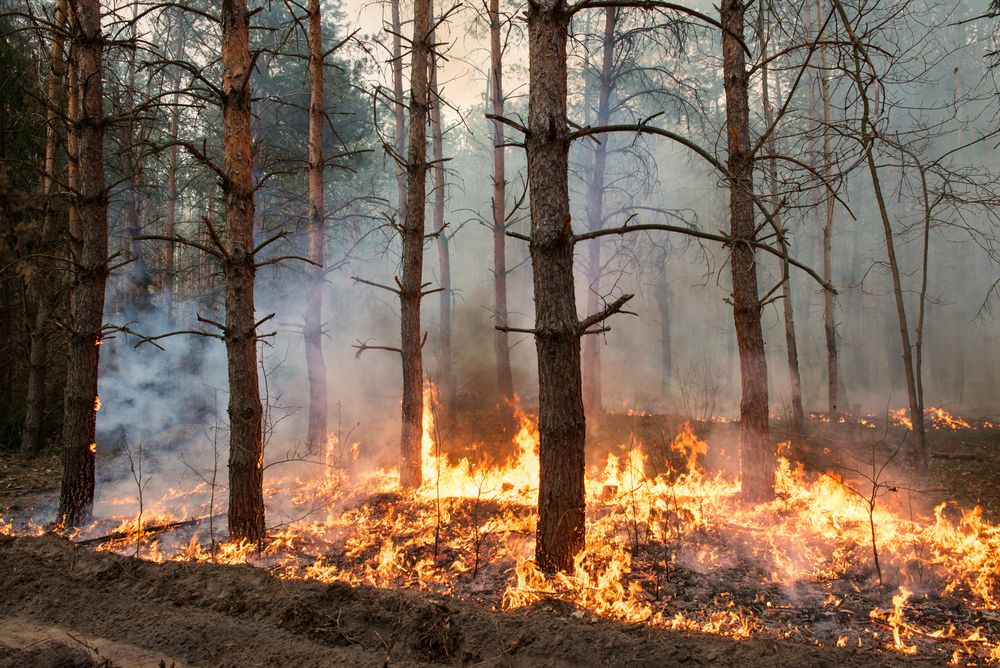
The most effective and common reforestation technique for a recently burned woodland is human planters carrying sacks of seedlings and manually selecting and placing them across miles of landscapes. This back-breaking work is rarely done by anyone for more than a year or two, so labor is scarce and turnover is intense.

Even if the labor was available on tap, the trees might not be. Seedlings take time to grow in nurseries and a major wildfire might necessitate the purchase and planting of millions of new trees. It’s impossible for nurseries to anticipate this demand, and the risk associated with growing such numbers on speculation is more than many can afford. One missed guess could put the whole operation underwater.

Meanwhile if nothing gets planted, invasive weeds move in with a vengeance, claiming huge areas that were once old growth forests. Lacking the labor and tree inventory to stem this possibility, forest keepers resort to a stopgap measure: use helicopters to drench the area in herbicides to kill weeds, then saturate it with fast-growing cheatgrass or the like. (The alternative to spraying is, again, the manual approach: machetes.)

At least then, in a year, instead of a weedy wasteland, you have a grassy monoculture — not a forest, but it’ll do until the forest gets here.

One final complication: helicopter spraying is a horrendously dangerous profession. These pilots are flying at sub-100-foot elevations, performing high-speed maneuvers so that their sprays reach the very edge of burn zones but they don’t crash head-on into the trees. This is an extremely dangerous occupation: 80 to 100 crashes occur every year in the U.S. alone.

In short, there are more and worse fires and we have fewer resources — and dated ones at that — with which to restore forests after them.

These are facts anyone in forest ecology and logging are familiar with, but perhaps not as well known among technologists. We do tend to stay in areas with cell coverage. But it turns out that a boost from the cloistered knowledge workers of the tech world — specifically those in the Emerald City — may be exactly what the industry and ecosystem require.

Simple idea, complex solution

So what’s the solution to all this? Automation, right?

Automation, especially via robotics, is proverbially suited for jobs that are “dull, dirty, and dangerous.” Restoring a forest is dirty and dangerous to be sure. But dull isn’t quite right. It turns out that the process requires far more intelligence than anyone was willing, it seems, to apply to the problem — with the exception of those planters. That’s changing.

Earlier this year, DroneSeed was awarded the first multi-craft, over-55-pounds unmanned aerial vehicle license ever issued by the FAA. Its custom UAV platforms, equipped with multispectral camera arrays, high-end lidar, 6-gallon tanks of herbicide, and proprietary seed dispersal mechanisms have been hired by several major forest management companies, with government entities eyeing the service as well.

These drones scout a burned area, mapping it down to as high as centimeter accuracy, including objects and plant species, fumigate it efficiently and autonomously, identify where trees would grow best, then deploy painstakingly designed seed-nutrient packages to those locations. It’s cheaper than people, less wasteful and dangerous than helicopters, and smart enough to scale to national forests currently at risk of permanent damage.

I met with the company’s team at their headquarters near Ballard, where complete and half-finished drones sat on top of their cases and the air was thick with capsaicin (we’ll get to that).

The idea for the company began when founder and CEO Grant Canary burned through a few sustainable startup ideas after his last company was acquired, and was told, in his despondency, that he might have to just go plant trees. Canary took his friend’s suggestion literally.

“I started looking into how it’s done today,” he told me. “It’s incredibly outdated. Even at the most sophisticated companies in the world, planters are superheroes that use bags and a shovel to plant trees. They’re being paid to move material over mountainous terrain and be a simple AI and determine where to plant trees where they will grow — microsites. We are now able to do both these functions with drones. This allows those same workers to address much larger areas faster without the caloric wear and tear.”

It may not surprise you to hear that investors are not especially hot on forest restoration (I joked that it was a “growth industry” but really because of the reasons above it’s in dire straits).

But investors are interested in automation, machine learning, drones, and especially government contracts. So the pitch took that form. With the money Droneseed secured, it has built its modestly sized but highly accomplished team and produced the prototype drones with which is has captured several significant contracts before even announcing that it exists.

“We definitely don’t fit the mold or metrics most startups are judged on. The nice thing about not fitting the mold is people double take and then get curious,” Canary said. “Once they see we can actually execute and have been with 3 of the 5 largest timber companies in the US for years, they get excited and really start advocating hard for us.”

The company went through Techstars, and Social Capital helped them get on their feet, with Spero Ventures joining up after the company got some groundwork done.

If things go as Droneseed hopes, these drones could be deployed all over the world by trained teams, allowing spraying and planting efforts in nurseries and natural forests to take place exponentially faster and more efficiently than they are today. It’s genuine change-the-world-from-your-garage stuff, which is why this article is so long.

Hunter (weed) killers

The job at hand isn’t simple or even straightforward. Every landscape differs from every other, not just in the shape and size of the area to be treated but the ecology, native species, soil type and acidity, type of fire or logging that cleared it, and so on. So the first and most important task is to gather information.

For this Droneseed has a special craft equipped with a sophisticated imaging stack. This first pass is done using waypoints set on satellite imagery.

The information collected at this point is really far more detailed than what’s actually needed. The lidar, for instance, collects spatial information at a resolution much beyond what’s needed to understand the shape of the terrain and major obstacles. It produces a 3D map of the vegetation as well as the terrain, allowing the system to identify stumps, roots, bushes, new trees, erosion, and other important features.

This works hand in hand with the multispectral camera, which collects imagery not just in the visible bands — useful for identifying things — but also in those outside the human range, which allows for in-depth analysis of the soil and plant life.

The resulting map of the area is not just useful for drone navigation, but for the surgical strikes that are necessary to make this kind of drone-based operation worth doing in the first place. No doubt there are researchers who would love to have this data as well.
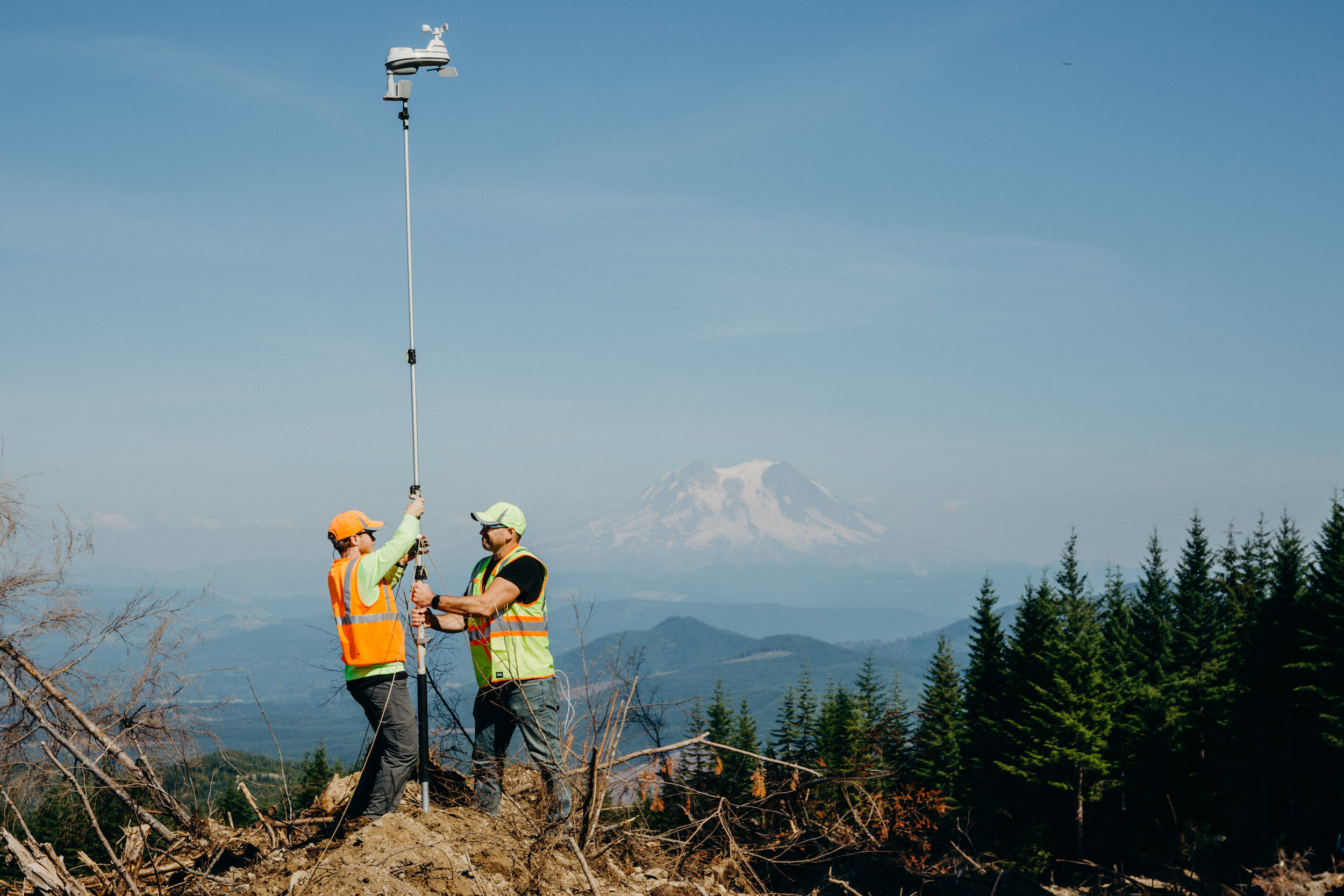
Now, spraying and planting are very different tasks. The first tends to be done indiscriminately using helicopters, and the second by laborers who burn out after a couple years — as mentioned above, it’s incredibly difficult work. The challenge in the first case is to improve efficiency and efficacy, while in the second case is to automate something that requires considerable intelligence.

Spraying is in many ways simpler. Identifying invasive plants isn’t easy, exactly, but it can be done with imagery like that the drones are collecting. Having identified patches of a plant to be eliminated, the drones can calculate a path and expend only as much herbicide is necessary to kill them, instead of dumping hundreds of gallons indiscriminately on the entire area. It’s cheaper and more environmentally friendly. Naturally, the opposite approach could be used for distributing fertilizer or some other agent.

I’m making it sound easy again. This isn’t a plug and play situation — you can’t buy a DJI drone and hit the “weedkiller” option in its control software. A big part of this operation was the creation not only of the drones themselves, but the infrastructure with which to deploy them.

Conservation convoy
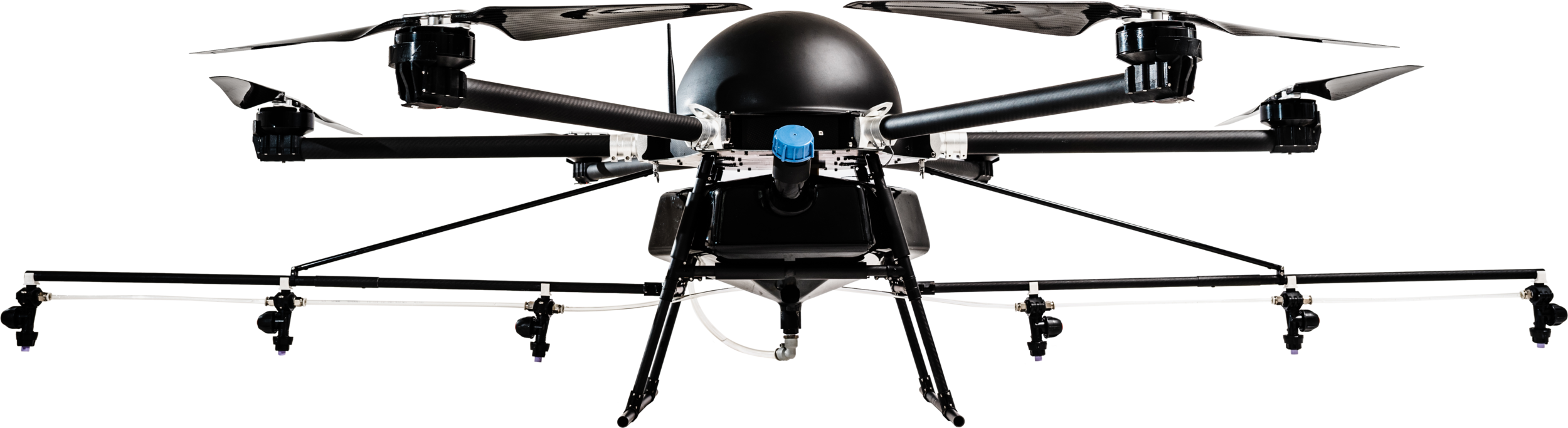
The drones themselves are unique, but not alarmingly so. They’re heavy-duty craft, capable of lifting well over the 57 pounds of payload they carry (the FAA limits them to 115 pounds).

“We buy and gut aircraft, then retrofit them,” Canary explained simply. Their head of hardware, would probably like to think there’s a bit more to it than that, but really the problem they’re solving isn’t “make a drone” but “make drones plant trees.” To that end, Canary explained, “the most unique engineering challenge was building a planting module for the drone that functions with the software.” We’ll get to that later.

DroneSeed deploys drones in swarms, which means as many as five drones in the air at once — which in turn means they need two trucks and trailers with their boxes, power supplies, ground stations, and so on. The company’s VP of operations comes from a military background where managing multiple aircraft onsite was part of the job, and she’s brought her rigorous command of multi-aircraft environments to the company.
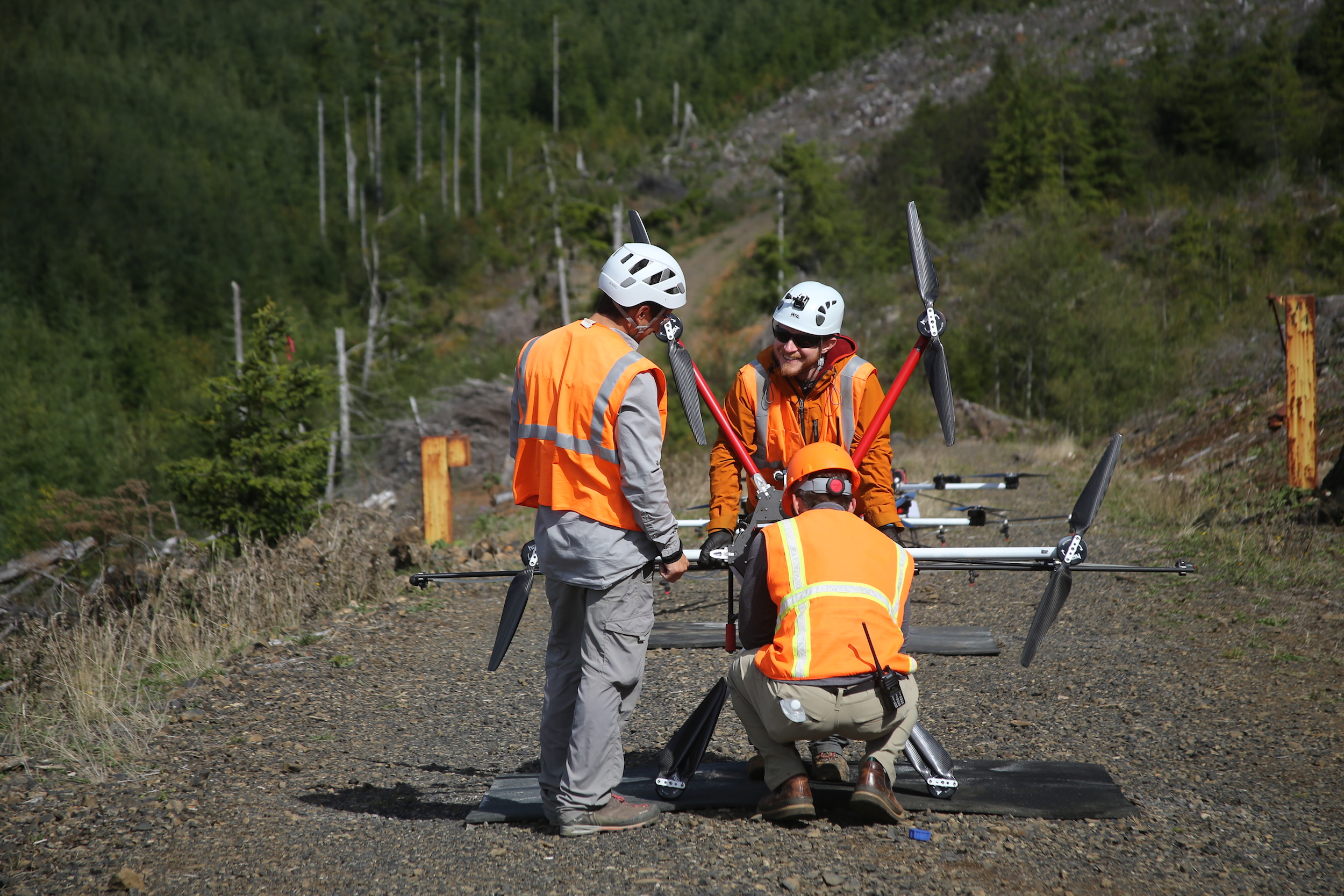
The drones take off and fly autonomously, but always under direct observation by the crew. If anything goes wrong, they’re there to take over, though of course there are plenty of autonomous behaviors for what to do in case of, say, a lost positioning signal or bird strike.

They fly in patterns calculated ahead of time to be the most efficient, spraying at problem areas when they’re over them, and returning to the ground stations to have power supplies swapped out before returning to the pattern. It’s key to get this process down pat, since efficiency is a major selling point. If a helicopter does it in a day, why shouldn’t a drone swarm? It would be sad if they had to truck the craft back to a hangar and recharge them every hour or two. It also increases logistics costs like gas and lodging if it takes more time and driving.

This means the team involves several people as well as several drones. Qualified pilots and observers are needed, as well as people familiar with the hardware and software that can maintain and troubleshoot on site — usually with no cell signal or other support. Like many other forms of automation, this one brings its own new job opportunities to the table.

AI plays Mother Nature

The actual planting process is deceptively complex.

The idea of loading up a drone with seeds and setting it free on a blasted landscape is easy enough to picture. Hell, it’s been done. There are efforts going back decades to essentially load seeds or seedlings into guns and fire them out into the landscape at speeds high enough to bury them in the dirt: in theory this combines the benefits of manual planting with the scale of carpeting the place with seeds.

But whether it was slapdash placement or the shock of being fired out of a seed gun, this approach never seemed to work.

Forestry researchers have shown the effectiveness of finding the right “microsite” for a seed or seedling; in fact, it’s why manual planting works as well as it does. Trained humans find perfect spots to put seedlings: in the lee of a log; near but not too near the edge of a stream; on the flattest part of a slope, and so on. If you really want a forest to grow, you need optimal placement, perfect conditions, and preventative surgical strikes with pesticides.

Although it’s difficult it’s also the kind of thing that a machine learning model can become good at. Sorting through messy, complex imagery and finding local minima and maxima is a specialty of today’s ML systems, and the aerial imagery from the drones is rich in relevant data.

The company’s CTO led the creation of an ML model that determines the best locations to put trees at a site — though this task can be highly variable depending on the needs of the forest. A logging company might want a tree every couple feet even if that means putting them in sub-optimal conditions — but a few inches to the left or right may make all the difference. On the other hand, national forests may want more sparse deployments or specific species in certain locations to curb erosion or establish sustainable firebreaks.

Once the data has been crunched, the map is loaded into the drones’ hive mind and the convoy goes to the location, where the craft are loaded up with seeds instead of herbicides.

But not just any old seeds! You see, that’s one more wrinkle. If you just throw a sagebrush seed on the ground, even if it’s in the best spot in the world, it could easily be snatched up by an animal, roll or wash down to a nearby crevasse, or simply fail to find the right nutrients in time despite the planter’s best efforts.

That’s why DroneSeed’s Head of Planting and his team have been working on a proprietary seed packet that they were unbelievably reticent to detail.

From what I could gather, they’ve put a ton of work into packaging the seeds into nutrient-packed little pucks held together with a biodegradable fiber. The outside is dusted with capsaicin, the chemical that makes spicy food spicy (and also what makes bear spray do what it does). If they hadn’t told me, I might have guessed, since the workshop area was hazy with it, leading us all to cough tear up a little. If I were a marmot, I’d learn to avoid these things real fast.

The pucks, or “seed vessels,” can and must be customized for the location and purpose — you have to match the content and acidity of the soil, things like that. DroneSeed will have to make millions of these things, but it doesn’t plan to be the manufacturer.

Finally these pucks are loaded in a special puck-dispenser which, closely coordinating with the drone, spits one out at the exact moment and speed needed to put it within a few centimeters of the microsite.

All these factors should improve the survival rate of seedlings substantially. That means that the company’s methods will not only be more efficient, but more effective. Reforestation is a numbers game played at scale, and even slight improvements — and DroneSeed is promising more than that — are measured in square miles and millions of tons of biomass.

Proof of life

DroneSeed has already signed several big contracts for spraying, and planting is next. Unfortunately the timing on their side meant they missed this year’s planting season, though by doing a few small sites and showing off the results, they’ll be in pole position for next year.

After demonstrating the effectiveness of the planting technique, the company expects to expand its business substantially. That’s the scaling part — again, not easy, but easier than hiring another couple thousand planters every year.
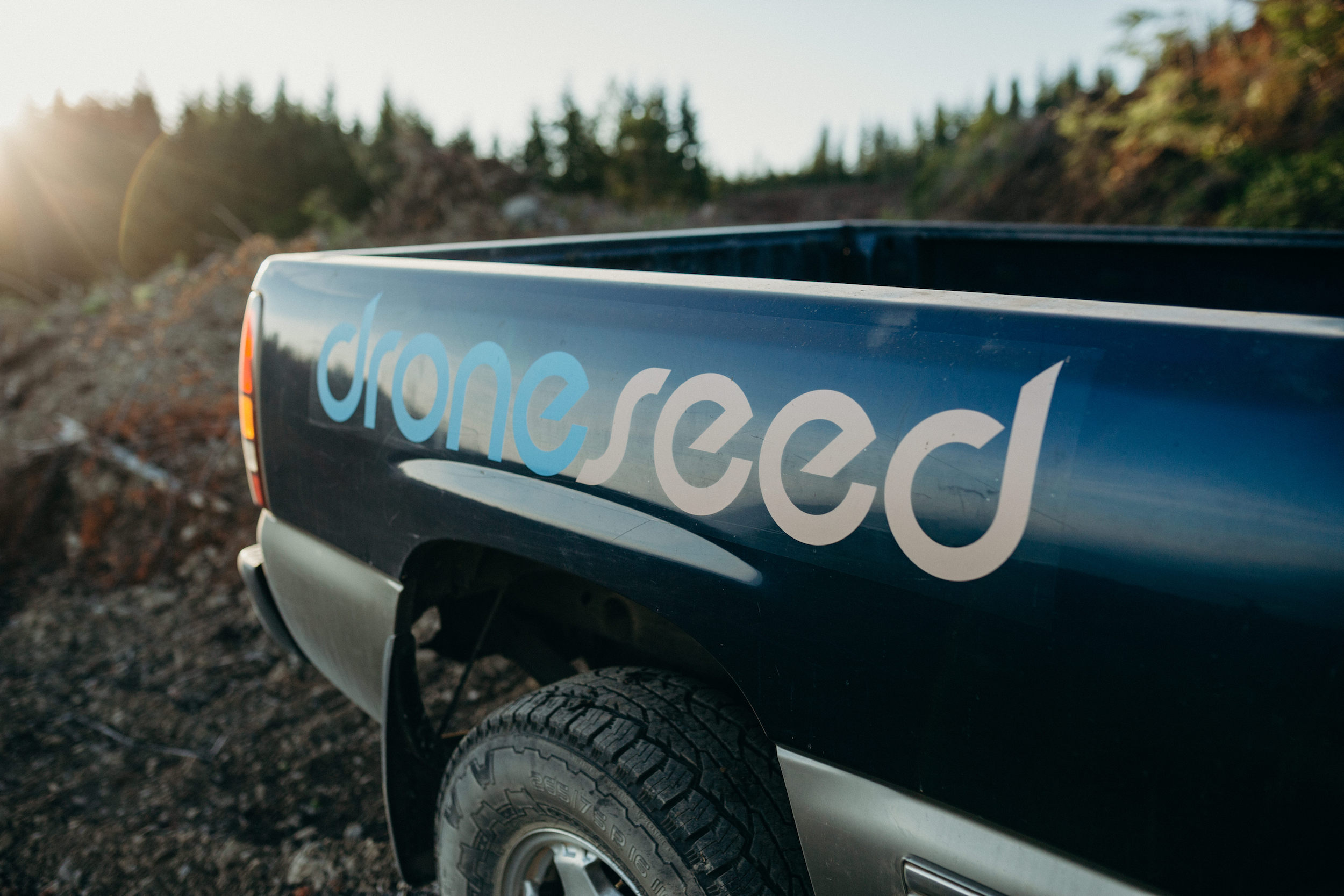
Ideally the hardware can be assigned to local teams that do the on-site work, producing loci of activity around major forests from which jobs can be deployed at large or small scales. A set of 5 or 6 drones does the work of a helicopter, roughly speaking, so depending on the volume requested by a company or forestry organization you may need dozens on demand.

That’s all yet to be explored, but DroneSeed is confident that the industry will see the writing on the wall when it comes to the old methods, and identify them as a solution that fits the future.

If it sounds like I’m cheerleading for this company, that’s because I am. It’s not often in the world of tech startups that you find a group of people not just attempting to solve a serious problem — it’s common enough to find companies hitting this or that issue — but who have spent the time, gathered the expertise, and really done the dirty, boots-on-the-ground work that needs to happen so it goes from great idea to real company.

That’s what I felt was the case with DroneSeed, and here’s hoping their work pays off — for their sake, sure, but mainly for ours.

from Startups – TechCrunch https://ift.tt/2zr3Fzs

#USA Corvus Insurance lands a fresh $8 million to turn sensor data into actionable info for its food and pharma customers

//

Corvus Insurance, a two-year-old, Boston-based insurance company that uses data across more than 50 criteria to predict and prevent losses for its corporate customers in the food and pharmaceutical industries, has attracted $8 million in funding, shows a newly processed SEC filing that says the capital came from six investors.

The company had previously raised $4 million seed funding led by Bain Capital Ventures. The filing shows a target of $10 million.

It’s an interesting company. Much of the data it extracts comes from Internet of Things sensors that can be used to predict the likelihood of a claim, including pressure on a roof owing to the weight of snow, for example. But it also relies on other data from all around, including videos, mobile phones and social media and turns them into tools for risk management.

Founder Philip Edmundson is a veteran of the insurance industry, having previously founded and sold a brokerage business in 2015. As he told the outlet Business Insurance earlier this year, he jumped back into the business after spying a fresh opportunity to focus not on getting rid of the middleman — which is the objective of many insurtech startups — but instead on the claims piece of the insurance business, which consumes far more of each dollar spent in the industry.

When it comes to shipping, for example, he’d said that if a company has a claim or multiple claims around food spoilage with a certain shipper or region, similar instances can be avoided by planning around those situations with recommendations from Corvus. (An agreement between Corvus and one of the largest temperature sensor companies in the world, Sensitech, certainly helps on this front.)

The company is focused for now on the food and pharmaceutical industries because both use sensors everywhere — on vehicles, machines, HVAC systems — for insurance and for regulatory reasons. But presumably, if it can prove its use case, it will expand its target market over time.

In the meantime, it’s part of a fast-growing, and increasingly crowded, landscape. As of last month, global fundraising for insurtech startups surpassed the volume reached in all of 2017, according to advisory firm Hampleton Partners’ latest insurtech M&A market report, which says 204 deals had been closed as of October, compared with 202 last year and 174 in 2016. All told, investors plugged $2.6 billion into those 204 deals — nearly the $2.7 billion that was plugged into insurtech startups in 2015.

Apparently all of those deals are leading to a lot of dealmaking, too. According to the report, the insurtech sector has seen 151 acquisitions since 2016, including by legacy players, as well as private equity firms.

from Startups – TechCrunch https://ift.tt/2AnevWL

#USA Corvus Insurance lands a fresh $8 million to turn sensor data into actionable info for its food and pharma customers

//

Corvus Insurance, a two-year-old, Boston-based insurance company that uses data across more than 50 criteria to predict and prevent losses for its corporate customers in the food and pharmaceutical industries, has attracted $8 million in funding, shows a newly processed SEC filing that says the capital came from six investors.

The company had previously raised $4 million seed funding led by Bain Capital Ventures. The filing shows a target of $10 million.

It’s an interesting company. Much of the data it extracts comes from Internet of Things sensors that can be used to predict the likelihood of a claim, including pressure on a roof owing to the weight of snow, for example. But it also relies on other data from all around, including videos, mobile phones and social media and turns them into tools for risk management.

Founder Philip Edmundson is a veteran of the insurance industry, having previously founded and sold a brokerage business in 2015. As he told the outlet Business Insurance earlier this year, he jumped back into the business after spying a fresh opportunity to focus not on getting rid of the middleman — which is the objective of many insurtech startups — but instead on the claims piece of the insurance business, which consumes far more of each dollar spent in the industry.

When it comes to shipping, for example, he’d said that if a company has a claim or multiple claims around food spoilage with a certain shipper or region, similar instances can be avoided by planning around those situations with recommendations from Corvus. (An agreement between Corvus and one of the largest temperature sensor companies in the world, Sensitech, certainly helps on this front.)

The company is focused for now on the food and pharmaceutical industries because both use sensors everywhere — on vehicles, machines, HVAC systems — for insurance and for regulatory reasons. But presumably, if it can prove its use case, it will expand its target market over time.

In the meantime, it’s part of a fast-growing, and increasingly crowded, landscape. As of last month, global fundraising for insurtech startups surpassed the volume reached in all of 2017, according to advisory firm Hampleton Partners’ latest insurtech M&A market report, which says 204 deals had been closed as of October, compared with 202 last year and 174 in 2016. All told, investors plugged $2.6 billion into those 204 deals — nearly the $2.7 billion that was plugged into insurtech startups in 2015.

Apparently all of those deals are leading to a lot of dealmaking, too. According to the report, the insurtech sector has seen 151 acquisitions since 2016, including by legacy players, as well as private equity firms.

from Startups – TechCrunch https://ift.tt/2AnevWL

#USA Corvus Insurance lands a fresh $8 million to turn sensor data into actionable info for its food and pharma customers

//

Corvus Insurance, a two-year-old, Boston-based insurance company that uses data across more than 50 criteria to predict and prevent losses for its corporate customers in the food and pharmaceutical industries, has attracted $8 million in funding, shows a newly processed SEC filing that says the capital came from six investors.

The company had previously raised $4 million seed funding led by Bain Capital Ventures. The filing shows a target of $10 million.

It’s an interesting company. Much of the data it extracts comes from Internet of Things sensors that can be used to predict the likelihood of a claim, including pressure on a roof owing to the weight of snow, for example. But it also relies on other data from all around, including videos, mobile phones and social media and turns them into tools for risk management.

Founder Philip Edmundson is a veteran of the insurance industry, having previously founded and sold a brokerage business in 2015. As he told the outlet Business Insurance earlier this year, he jumped back into the business after spying a fresh opportunity to focus not on getting rid of the middleman — which is the objective of many insurtech startups — but instead on the claims piece of the insurance business, which consumes far more of each dollar spent in the industry.

When it comes to shipping, for example, he’d said that if a company has a claim or multiple claims around food spoilage with a certain shipper or region, similar instances can be avoided by planning around those situations with recommendations from Corvus. (An agreement between Corvus and one of the largest temperature sensor companies in the world, Sensitech, certainly helps on this front.)

The company is focused for now on the food and pharmaceutical industries because both use sensors everywhere — on vehicles, machines, HVAC systems — for insurance and for regulatory reasons. But presumably, if it can prove its use case, it will expand its target market over time.

In the meantime, it’s part of a fast-growing, and increasingly crowded, landscape. As of last month, global fundraising for insurtech startups surpassed the volume reached in all of 2017, according to advisory firm Hampleton Partners’ latest insurtech M&A market report, which says 204 deals had been closed as of October, compared with 202 last year and 174 in 2016. All told, investors plugged $2.6 billion into those 204 deals — nearly the $2.7 billion that was plugged into insurtech startups in 2015.

Apparently all of those deals are leading to a lot of dealmaking, too. According to the report, the insurtech sector has seen 151 acquisitions since 2016, including by legacy players, as well as private equity firms.

from Startups – TechCrunch https://ift.tt/2AnevWL

#USA Corvus Insurance lands a fresh $8 million to turn sensor data into actionable info for its food and pharma customers

//

Corvus Insurance, a two-year-old, Boston-based insurance company that uses data across more than 50 criteria to predict and prevent losses for its corporate customers in the food and pharmaceutical industries, has attracted $8 million in funding, shows a newly processed SEC filing that says the capital came from six investors.

The company had previously raised $4 million seed funding led by Bain Capital Ventures. The filing shows a target of $10 million.

It’s an interesting company. Much of the data it extracts comes from Internet of Things sensors that can be used to predict the likelihood of a claim, including pressure on a roof owing to the weight of snow, for example. But it also relies on other data from all around, including videos, mobile phones and social media and turns them into tools for risk management.

Founder Philip Edmundson is a veteran of the insurance industry, having previously founded and sold a brokerage business in 2015. As he told the outlet Business Insurance earlier this year, he jumped back into the business after spying a fresh opportunity to focus not on getting rid of the middleman — which is the objective of many insurtech startups — but instead on the claims piece of the insurance business, which consumes far more of each dollar spent in the industry.

When it comes to shipping, for example, he’d said that if a company has a claim or multiple claims around food spoilage with a certain shipper or region, similar instances can be avoided by planning around those situations with recommendations from Corvus. (An agreement between Corvus and one of the largest temperature sensor companies in the world, Sensitech, certainly helps on this front.)

The company is focused for now on the food and pharmaceutical industries because both use sensors everywhere — on vehicles, machines, HVAC systems — for insurance and for regulatory reasons. But presumably, if it can prove its use case, it will expand its target market over time.

In the meantime, it’s part of a fast-growing, and increasingly crowded, landscape. As of last month, global fundraising for insurtech startups surpassed the volume reached in all of 2017, according to advisory firm Hampleton Partners’ latest insurtech M&A market report, which says 204 deals had been closed as of October, compared with 202 last year and 174 in 2016. All told, investors plugged $2.6 billion into those 204 deals — nearly the $2.7 billion that was plugged into insurtech startups in 2015.

Apparently all of those deals are leading to a lot of dealmaking, too. According to the report, the insurtech sector has seen 151 acquisitions since 2016, including by legacy players, as well as private equity firms.

from Startups – TechCrunch https://ift.tt/2AnevWL

#USA Corvus Insurance lands a fresh $8 million to turn sensor data into actionable info for its food and pharma customers

//

Corvus Insurance, a two-year-old, Boston-based insurance company that uses data across more than 50 criteria to predict and prevent losses for its corporate customers in the food and pharmaceutical industries, has attracted $8 million in funding, shows a newly processed SEC filing that says the capital came from six investors.

The company had previously raised $4 million seed funding led by Bain Capital Ventures. The filing shows a target of $10 million.

It’s an interesting company. Much of the data it extracts comes from Internet of Things sensors that can be used to predict the likelihood of a claim, including pressure on a roof owing to the weight of snow, for example. But it also relies on other data from all around, including videos, mobile phones and social media and turns them into tools for risk management.

Founder Philip Edmundson is a veteran of the insurance industry, having previously founded and sold a brokerage business in 2015. As he told the outlet Business Insurance earlier this year, he jumped back into the business after spying a fresh opportunity to focus not on getting rid of the middleman — which is the objective of many insurtech startups — but instead on the claims piece of the insurance business, which consumes far more of each dollar spent in the industry.

When it comes to shipping, for example, he’d said that if a company has a claim or multiple claims around food spoilage with a certain shipper or region, similar instances can be avoided by planning around those situations with recommendations from Corvus. (An agreement between Corvus and one of the largest temperature sensor companies in the world, Sensitech, certainly helps on this front.)

The company is focused for now on the food and pharmaceutical industries because both use sensors everywhere — on vehicles, machines, HVAC systems — for insurance and for regulatory reasons. But presumably, if it can prove its use case, it will expand its target market over time.

In the meantime, it’s part of a fast-growing, and increasingly crowded, landscape. As of last month, global fundraising for insurtech startups surpassed the volume reached in all of 2017, according to advisory firm Hampleton Partners’ latest insurtech M&A market report, which says 204 deals had been closed as of October, compared with 202 last year and 174 in 2016. All told, investors plugged $2.6 billion into those 204 deals — nearly the $2.7 billion that was plugged into insurtech startups in 2015.

Apparently all of those deals are leading to a lot of dealmaking, too. According to the report, the insurtech sector has seen 151 acquisitions since 2016, including by legacy players, as well as private equity firms.

from Startups – TechCrunch https://ift.tt/2AnevWL