

About Startup365

Chaque jour nous vous présenterons une nouvelle Startup française ! Notre pays regorge de talents et d'entrepreneurs brillants ! Alors partons à la découverte des meilleures startup françaises ! Certaines d'entre elles sont dans une étape essentielle dans la vie d'une startup : la recherche de financement, notamment par le financement participatif (ou crowdfunding en anglais). Alors participez à cette grande aventure en leur faisant une petite donation ! Les startups françaises ont besoin de vous !

#Blockchain Jason Cox Extends Open Invitation for Assistance With Development and Review of Bitcoin Cash Code

BCH developer conversations have been taking place ahead of the upcoming May 2019 upgrade. In their latest video meeting, devs agreed that they need to know how much BCH is locked up in p2sh segwit addresses. It was also agreed that Andrea Suisani will take charge of the byte transaction size limit and Mark Lundeberg will review Amaury Sechet’s code on Schnorr signatures. Lastly, Jason Cox extended an open invitation for the qualified to assist with the development and review of BCH code.

Also read: Major Mining Pools Have a ‘High Die-Off Rate’ Study Reveals

Meeting of the Minds

A BCH developer meeting was held recently to get the ball rolling for the upcoming May 2019 upgrade. The meeting was moderated by David R Allen and consisted of lead developer of Bitcoin ABC Amaury Sechet, Bitcoin Unlimited developer Andrea Suisani, Bitcoin ABC developer Antony Zegers, Bitcoin ABC developer Jason B. Cox, Openbazaar developer Chris Pacia, CTO of Bitcoin.com Emil Oldenburg, and Bitcoin Cash developer Mark Lundeberg.

Agenda One: BIP 62, Attempts to Fix Third Party Malleability

After introductions, the meeting opened with discussions on BIP 62. Zegers pointed out that some BCH users are unable to recover their funds because they are sending BCH to BTC segwit P2SH addresses. Then, Cox asked if it was possible to identify the extent of this problem. In response, Oldenburg proposed indexing all segwit addresses and then checking the UTXOs, an extremely time-consuming process.

Alternatively, Lunderberg proposed a way to fix third party malleability by applying the clean stack rule to Pay-to-Public-Key-Hash and Pay-to-Script-Hash multisig. That way every other script would have to manually check itself using OP_DEPTH. However, he noted that his solution would require another hard fork on top of the May 2019 hard fork.

In conclusion, the developers concluded that they need to measure the amount of coins that are locked in p2sh segwit addresses before proceeding on BIP 62.

Agenda Two: Changing the 100 Byte Transaction Size

Jason Cox Extends Open Invitation for Assistance With Development and Review of Bitcoin Cash Code

Lunderberg pointed out that since the August 2017 hard fork, there have been in the ballpark of ten transactions that were less than 100 bytes. Since a 100-byte limit could affect some transactions, he proposed relaxing it to 64 bytes.

Interestingly, Cox pointed out that it’s easier to to lower the byte transaction size limit than it is to raise it. Suisani added to Cox’s point, and explained that raising the byte transaction size limit would have to be implemented by hard fork.

At the end of the discussion, Suisani offered to lead the second agenda by maintaining a stream of communication between the developers, and writing notes to rationalize tweaking the constraint.

Agenda Three: Schnorr Signatures

Jason Cox Extends Open Invitation for Assistance With Development and Review of Bitcoin Cash Code

On the topic of Schnorr signatures, Sechet pointed out that Schnorr has cost advantages because of batch validation. For example, computing and verifying eight signatures as a batch is more cost-effective than checking eight signatures individually. He then pointed out that Schnorr will aid with user privacy and is better for the Bitcoin network itself.

Even though Sechet had made an implementation of Schnorr just over a year ago, his code has not yet been thoroughly reviewed. The lead developer of Bitcoin ABC warned that the code would have to be reviewed more than usual and implemented carefully, otherwise the network would become susceptible to side-channel attacks through the branch predictor of the CPU and through the cache hierarchy of the CPU.

After Sechet’s explanation, Lunderberg agreed to review the former’s code within a month and a half. Sensing that everyone in the group was stretched thin, Cox issued an open invite to cryptographers and developers to assist with development and review of Bitcoin Cash code.

Agenda Four: Old Opcodes

Jason Cox Extends Open Invitation for Assistance With Development and Review of Bitcoin Cash Code

As this point, most of the developers in the meeting had their plates full. In response, Suisani explained that he would reach out to the other Bitcoin Unlimited developers to see if they were interested in working on the old opcodes. Suisani explained that Bitcoin Unlimited developers were the logical choice as they had previously included Nchain implementation in the SV client they produced.

Closing Thoughts

Towards the end of the meeting, Oldenburg mentioned that there is currently a 25 unconfirmed transaction chain limit that is affecting various protocols right now, which needs fixing. He also mentioned that Bitcoin.com was currently working on its own on-chain dice game similar to Satoshidice. In response, news.Bitcoin.com reached out to Oldenburg for some closing thoughts on the developers meeting. The Bitcoin.com CTO was positive about the meeting overall, especially since the “limitation of unconfirmed chained transactions will be removed long term.”

Do you think you have what it takes to be a BCH developer? Let us know in the comments below.

Images courtesy of Shutterstock and Youtube.


Bitcoin News is growing fast. To reach our global audience, send us a news tip or submit a press release. Let’s work together to help inform the citizens of Earth (and beyond) about this new, important and amazing information network that is Bitcoin.

The post Jason Cox Extends Open Invitation for Assistance With Development and Review of Bitcoin Cash Code appeared first on Bitcoin News.

from Bitcoin News http://bit.ly/2FijZXW Jason Cox Extends Open Invitation for Assistance With Development and Review of Bitcoin Cash Code


#Blockchain Jason Cox Extends Open Invitation for Assistance With Development and Review of Bitcoin Cash Code
BCH developer conversations have been taking place ahead of the upcoming May 2019 upgrade. In their latest video meeting, devs agreed that they need to know how much BCH is locked up in p2sh segwit addresses. It was also agreed that Andrea Suisani will take charge of the byte transaction size limit and Mark Lundeberg will review Amaury Sechet’s code on Schnorr signatures. Lastly, Jason Cox extended an open invitation for the qualified to assist with the development and review of BCH code.

Also read: Major Mining Pools Have a ‘High Die-Off Rate’ Study Reveals

Meeting of the Minds

A BCH developer meeting was held recently to get the ball rolling for the upcoming May 2019 upgrade. The meeting was moderated by David R Allen and consisted of lead developer of Bitcoin ABC Amaury Sechet, Bitcoin Unlimited developer Andrea Suisani, Bitcoin ABC developer Antony Zegers, Bitcoin ABC developer Jason B. Cox, Openbazaar developer Chris Pacia, CTO of Bitcoin.com Emil Oldenburg, and Bitcoin Cash developer Mark Lundeberg.

Agenda One: BIP 62, Attempts to Fix Third Party Malleability

After introductions, the meeting opened with discussions on BIP 62. Zegers pointed out that some BCH users are unable to recover their funds because they are sending BCH to BTC segwit P2SH addresses. Then, Cox asked if it was possible to identify the extent of this problem. In response, Oldenburg proposed indexing all segwit addresses and then checking the UTXOs, an extremely time-consuming process.

Alternatively, Lunderberg proposed a way to fix third party malleability by applying the clean stack rule to Pay-to-Public-Key-Hash and Pay-to-Script-Hash multisig. That way every other script would have to manually check itself using OP_DEPTH. However, he noted that his solution would require another hard fork on top of the May 2019 hard fork.

In conclusion, the developers concluded that they need to measure the amount of coins that are locked in p2sh segwit addresses before proceeding on BIP 62.

Agenda Two: Changing the 100 Byte Transaction Size

Jason Cox Extends Open Invitation for Assistance With Development and Review of Bitcoin Cash Code

Lunderberg pointed out that since the August 2017 hard fork, there have been in the ballpark of ten transactions that were less than 100 bytes. Since a 100-byte limit could affect some transactions, he proposed relaxing it to 64 bytes.

Interestingly, Cox pointed out that it’s easier to to lower the byte transaction size limit than it is to raise it. Suisani added to Cox’s point, and explained that raising the byte transaction size limit would have to be implemented by hard fork.

At the end of the discussion, Suisani offered to lead the second agenda by maintaining a stream of communication between the developers, and writing notes to rationalize tweaking the constraint.

Agenda Three: Schnorr Signatures

Jason Cox Extends Open Invitation for Assistance With Development and Review of Bitcoin Cash Code
On the topic of Schnorr signatures, Sechet pointed out that Schnorr has cost advantages because of batch validation. For example, computing and verifying eight signatures as a batch is more cost-effective than checking eight signatures individually. He then pointed out that Schnorr will aid with user privacy and is better for the Bitcoin network itself.

Even though Sechet had made an implementation of Schnorr just over a year ago, his code has not yet been thoroughly reviewed. The lead developer of Bitcoin ABC warned that the code would have to be reviewed more than usual and implemented carefully, otherwise the network would become susceptible to side-channel attacks through the branch predictor of the CPU and through the cache hierarchy of the CPU.

After Sechet’s explanation, Lunderberg agreed to review the former’s code within a month and a half. Sensing that everyone in the group was stretched thin, Cox issued an open invite to cryptographers and developers to assist with development and review of Bitcoin Cash code.

Agenda Four: Old Opcodes

Jason Cox Extends Open Invitation for Assistance With Development and Review of Bitcoin Cash Code
As this point, most of the developers in the meeting had their plates full. In response, Suisani explained that he would reach out to the other Bitcoin Unlimited developers to see if they were interested in working on the old opcodes. Suisani explained that Bitcoin Unlimited developers were the logical choice as they had previously included Nchain implementation in the SV client they produced.

Closing Thoughts

Towards the end of the meeting, Oldenburg mentioned that there is currently a 25 unconfirmed transaction chain limit that is affecting various protocols right now, which needs fixing. He also mentioned that Bitcoin.com was currently working on its own on-chain dice game similar to Satoshidice. In response, news.Bitcoin.com reached out to Oldenburg for some closing thoughts on the developers meeting. The Bitcoin.com CTO was positive about the meeting overall, especially since the “limitation of unconfirmed chained transactions will be removed long term.”

Do you think you have what it takes to be a BCH developer? Let us know in the comments below.

Images courtesy of Shutterstock and Youtube.


Bitcoin News is growing fast. To reach our global audience, send us a news tip or submit a press release. Let’s work together to help inform the citizens of Earth (and beyond) about this new, important and amazing information network that is Bitcoin.

The post Jason Cox Extends Open Invitation for Assistance With Development and Review of Bitcoin Cash Code appeared first on Bitcoin News.

from Bitcoin News http://bit.ly/2FijZXW Jason Cox Extends Open Invitation for Assistance With Development and Review of Bitcoin Cash Code

#USA Daily Crunch: Well Facebook, you did it again

//

The Daily Crunch is TechCrunch’s roundup of our biggest and most important stories. If you’d like to get this delivered to your inbox every day at around 9am Pacific, you can subscribe here:

1. Facebook is the new crapware 

Well Facebook, you did it again. Fresh off its latest privacy scandal, the troubled social media giant has inked a deal with Android to pre-install its app on an undisclosed number of phones and make the software permanent. This means you won’t be able to delete Facebook from those phones. Thanks, Facebook.

2. The world’s first foldable phone is real 

Chinese company Royole has beaten Samsung to the market and has been showing off a foldable phone/tablet this week at CES. While it’s not the most fluid experience, the device definitely works at adapting to your needs.

3. CES revokes award from female-founded sex tech company

Outcries of a double-standard are pouring out of CES after the Consumer Tech Association revoked an award from a company geared toward women’s sexual health.

4. Everything Google announced at CES 2019 

Google went all in on the Assistant this year at CES. The company boasted that the voice-enabled AI will make its way onto a billion devices by the end of the month — up from 400 million last year. But what’s most exciting is the expanded capabilities of Google’s Assistant. Soon you’ll be able to check into flights and translate conversations on the fly with a simple “Hey Google.”

5. Rebranding WeWork won’t work 

The company formerly known as WeWork has rebranded to the We Company, but its new strategy has the potential to plunge the company further into debt.

6. Despite promises to stop, US cell carriers are still selling your real-time phone location data

Last year a little-known company called LocationSmart came under fire after leaking location data from AT&T, Verizon, T-Mobile and Sprint users to shady customers. LocationSmart quickly buckled under public scrutiny and promised to stop selling user data, but few focused on another big player in the location tracking business: Zumigo.

7. The best and worst of CES 2019 

From monster displays to VR in cars, we’re breaking down the good, the bad and the ugly from CES 2019.

from Startups – TechCrunch https://tcrn.ch/2C9mYh9

#Blockchain Bitcoin ATMs Continue to Spread Across the Globe

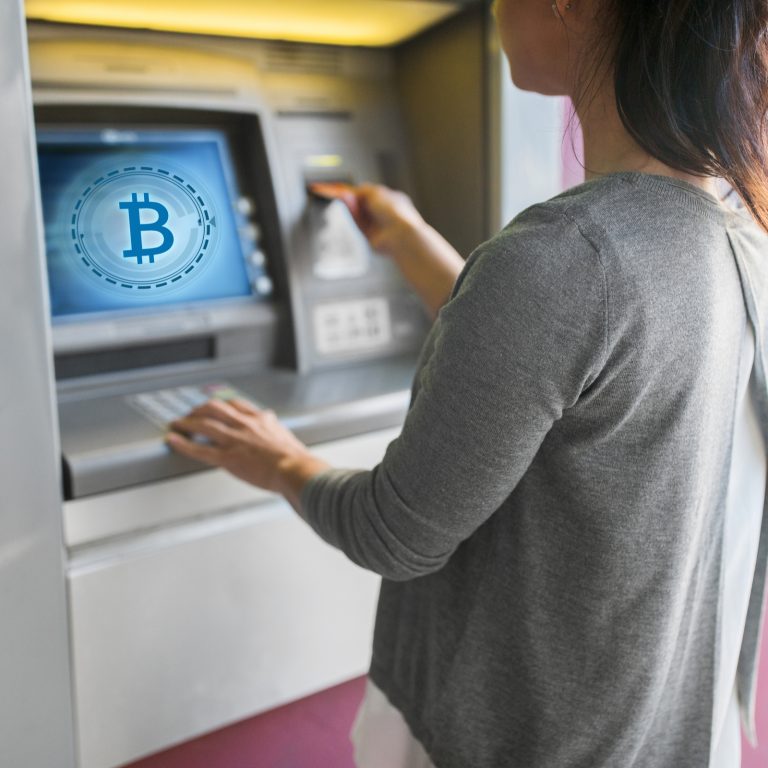
There are now over 4,000 bitcoin ATMs throughout the world, global statistics provided by Coinatmradar.com show. Nearly all of them support bitcoin (BTC) and a growing number are supporting bitcoin cash (BCH). Most of the machines, also known as BATMs, can be found in the U.S., though their presence is steadily growing, not only in developed European countries, but in Latin America and Asia too. 

Also read: Why Colombia Has Become a Hotspot for Bitcoin ATMs

The US and Europe

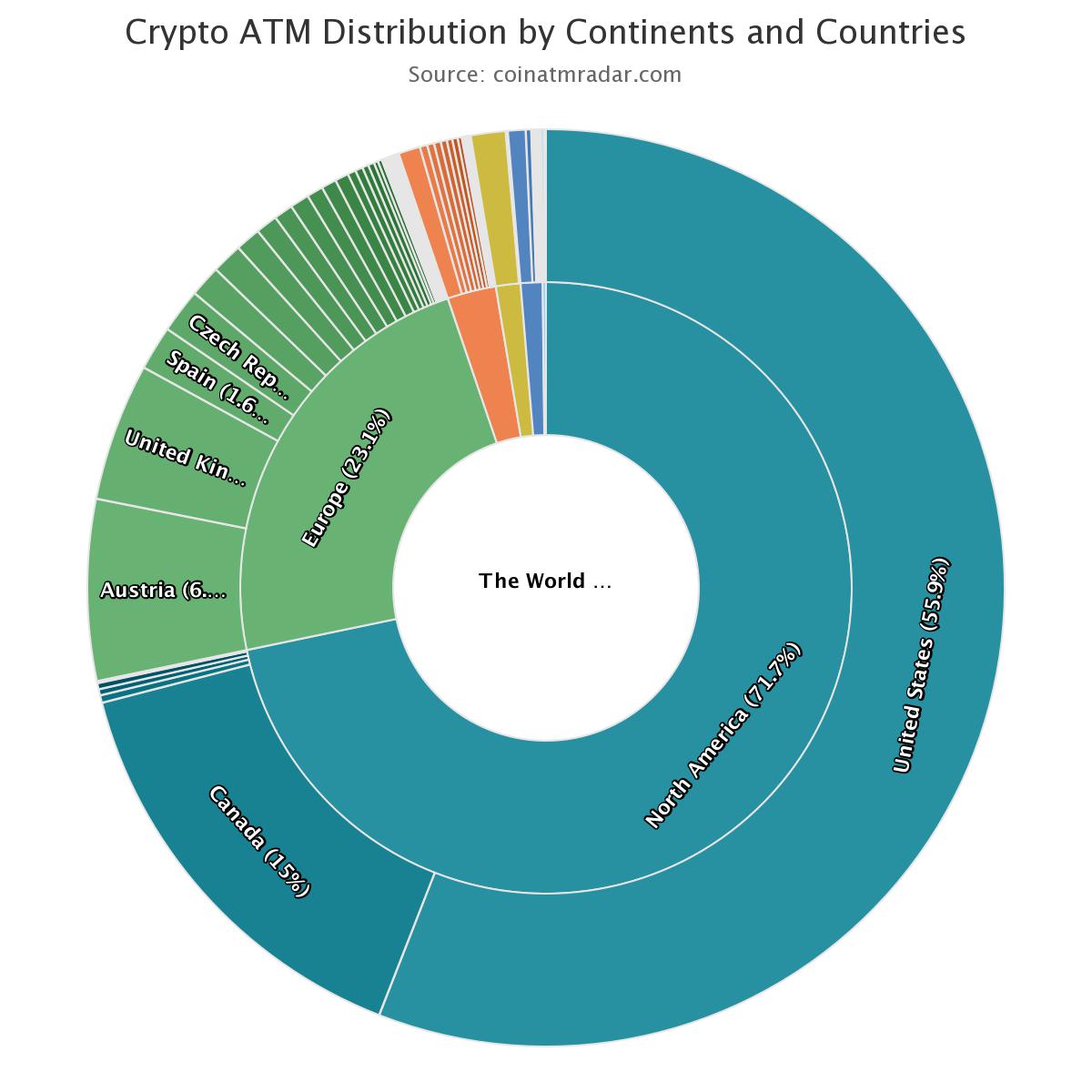
According to data from Coinatmradar.com, the U.S. has the highest number of crypto ATMs, with 2,493 – or 55.9 percent – of the world’s BATMs. 45 out of 50 states have at least one cryptocurrency ATM, with California leading with 475, followed by Illinois with 252. Chicago alone holds around 226. Other states with high numbers of ATMs include New York, with 131, and Georgia, which has 121 of the machines in its capital Atlanta. North America as a whole, including Canada, has 71.7 percent, or 2,981 of the world’s crypto ATMs.

Bitcoin ATMs Continue to Spread Across the Globe

Europe holds the second highest number of cryptocurrency ATMs, with 23.1 percent, or 958. Crypto-friendly Austria claims the crown, with 270, and the U.K. is not far behind having 214. Growth in has been steady in both the U.K. and Austria since last year, despite BTC losing over 70 percent of its value in this time. Other countries with relatively high numbers of crypto ATMs include Spain (65), Czech Republic (65), Russia (46), and Switzerland (45).

Bitcoin ATMs Continue to Spread Across the Globe

Growth in Latin America and Elsewhere

One region which has seen particularly strong growth has been Latin America, which now holds over 1.7 percent of the world’s crypto ATMS – a high number considering many are based in developing countries. Colombia has the highest number in the region, with 26. The number in the Andean nation has shot up in the past year as companies aggressively expand to provide for Venezuelan migrants living in Colombia who deal in crypto and send it home to loved ones in their crisis-stricken neighboring country. Elsewhere in Latin America, Argentina holds eight ATMs, Peru has one, while in Central America, Costa Rica’s capital has one ATM as does Guatemala’s. Mexico, on the other hand, is also seeing rapid expansion, with 11 ATMs.Bitcoin ATMs Continue to Spread Across the Globe

Elsewhere in the world, you can find 107 crypto ATMs in Asia, with the most in Hong Kong at 32, while in Japan there are 10, Malaysia 10, Singapore nine, Taiwan eight, and Israel eight. Georgia, which sits at the crossroads of of Western Asia and Eastern Europe, holds 11, in part because of its role as a mining epicenter. Africa holds only seven ATMs, with four being located in South Africa and one in Zimbabwe, a country where bitcoin has surged in popularity of late – despite a ban. Elsewhere, Australia holds 51 ATMs and the tiny island of St Kitts and Nevis has one.

No Signs of Slowing Down

According to the data from Coinatmradar.com, around six crypto ATMs are being installed every day. Genesis Coin is the largest manufacturer, with 1,326 dotted around the world. It is closely followed by General Bytes, with 1,250 and then Lamassu, which has 435. The majority of the world’s machines are one-way devices – meaning they can only be used to buy cryptocurrencies – though ATMs that allow users to sell are on the rise, too. Most of these devices support BTC, BCH, litecoin (LTC), and ethereum (ETH). With such fast growth through 2018, despite the market crash, it looks like global BATM numbers will continue to rise through 2019.

What do you think about the surge in popularity of cryptocurrency ATMs? Let us know what you think in the comments section below.


Images via Shutterstock, and Coinatmradar.com


Want to create your own secure cold storage paper wallet? Check our tools section.

The post Bitcoin ATMs Continue to Spread Across the Globe appeared first on Bitcoin News.

from Bitcoin News http://bit.ly/2Rkx9dm Bitcoin ATMs Continue to Spread Across the Globe

#Blockchain The Daily: Bitpay Adds Multi-Crypto Settlements, Shapeshift Downsizes

The Daily: Bitpay Adds Multi-Crypto Settlements, Shapeshift Is Downsizing

In Wednesday’s edition of The Daily we cover a new feature that will allow Bitpay merchants to automatically diversify their settlements, a downsizing at Shapeshift that will see its team cut by a third, a show of commitment to the crypto industry by the government of Malta, and a new offering of BCH margin trading.

Also Read: FBI Agents Raid Tech Campus Over Unauthorized Crypto Trading

Bitpay Adds Multi-Coin Settlements

Popular cryptocurrency payment processor Bitpay has introduced support for multi-coin settlements. The service added support for three stablecoins during 2018 (GUSD, USDC, and PAX), in addition to bitcoin cash BCH and BTC. The new feature means that merchants can now receive their Bitpay settlements in up to five of these cryptocurrencies all at once, in addition to their supported local fiat currency.

The Daily: Bitpay Adds Multi-Crypto Settlements, Shapeshift Downsizes
New Bitpay settlements page for merchants

“We’re excited to provide additional options and to give our merchants more flexibility with their settlements,” the Bitpay team stated. “We hope to continue adding valuable options for our merchants and their customers.”

Shapeshift Is Downsizing by a Third

The Daily: Bitpay Adds Multi-Crypto Settlements, Shapeshift DownsizesErik Voorhees, the founder and CEO of Shapeshift, has announced that his company is the latest venture to feel the “bitter frost” of crypto winter. The exchange platform is laying off 37 employees, reducing the size of its team by a third.

“Crypto, like the moon we strive toward, is a harsh mistress,” wrote Voorhees. “We ride high and fast during the ascents, growing at rates unseen almost anywhere else in the business world. And when the markets turn, the crypto recession is similarly dramatic and severe.”

Besides the general economic boom and bust cycle, the main reason identified for downsizing seems to be recognition that the company has lost focus. What started as just a simple tool for instant conversions grew too fast, with Shapeshift adding new services and acquiring other companies at a rate it was unable to manage. This caused the diversion of both time and financial resources, hurting its main business.

Another reason for the situation is that the changing regulatory environment forced the company to face “immense legal bills” just to handle possible government-related risks. It also caused the platform to impose identification on users by switching to a membership-based business model, which drove away many of its API partners who left for non-KYC competitors.

Malta Remains Committed to Crypto

The Daily: Bitpay Adds Multi-Crypto Settlements, Shapeshift DownsizesThanks to a welcoming stance and a clear regulatory framework, Malta has been able to position itself as a leading global cryptocurrency trading hub, with a multitude of digital asset exchanges choosing to be legally based there. The current crypto market downturn is not going to change that as far as the political leadership of the country is concerned.

After getting taunted by the by the local opposition for its work on becoming known as “Bitcoin Island,” the government has made it clear that it is proud of these efforts. The Parliamentary Secretariat for Financial Services, Digital Economy and Innovation said that numerous measures had been taken to secure this sector and give more peace of mind and protection to crypto investors, according to a local news report. The secretariat also remarked that a campaign by the Cyber Security Steering Committee was recently launched to educate the public on possible fraud.

The government’s answer also made it clear that the crypto industry is seen as a necessary part of the economy of the future in Malta along side artificial intelligence, esports, video gaming and space exploration.

Okex Launches Bitcoin Cash (BCH) Margin Trading

The Daily: Bitpay Adds Multi-Crypto Settlements, Shapeshift DownsizesOkex, the Malta-based exchange which supports fiat currencies such as the Vietnamese dong and Chinese yuan, has announced it has launched bitcoin cash (BCH) margin trading on the platform effective immediately.

According to the company, users can now enjoy trading BCH against USDT or BTC on margin with the option of 3x leverage, which is three times the user’s total balance at maximum. OK Piggy Bank, a tool for earning daily interest with users’ spare tokens launched earlier by the company, has also now pledged support for BCH.

What do you think about today’s news tidbits? Share your thoughts in the comments section below.


Images courtesy of Shutterstock, Bitpay.


Verify and track bitcoin cash transactions on our BCH Block Explorer, the best of its kind anywhere in the world. Also, keep up with your holdings, BCH and other coins, on our market charts at Satoshi’s Pulse, another original and free service from Bitcoin.com.

The post The Daily: Bitpay Adds Multi-Crypto Settlements, Shapeshift Downsizes appeared first on Bitcoin News.

from Bitcoin News http://bit.ly/2C9wwsA The Daily: Bitpay Adds Multi-Crypto Settlements, Shapeshift Downsizes

#Blockchain Thailand Issues 4 Cryptocurrency Licenses, Rejects 2 Exchanges

Thailand Issues 4 Cryptocurrency Licenses, Rejects 2 Exchanges

Thailand has officially granted licenses to three cryptocurrency exchanges and one broker-dealer. Two exchanges have been rejected and one is still being reviewed. These seven companies have been temporarily allowed to operate in the country. Two of them will now begin closing down their businesses.

Also read: Indian Supreme Court Moves Crypto Hearing, Community Calls for Positive Regulations

Four Crypto Licenses Granted

Thailand Issues 4 Cryptocurrency Licenses, Rejects 2 ExchangesThe Thai Securities and Exchange Commission (SEC) announced on Tuesday the results of the applications for crypto business licenses. Seven companies applied for a license and have been allowed to operate their crypto businesses while the regulators reviewed their applications.

The country’s ministry of finance “has granted digital asset business licences to four applicants,” the Thai SEC detailed, noting that two applications have been rejected and one is still under review.

Thailand Issues 4 Cryptocurrency Licenses, Rejects 2 ExchangesThree crypto exchanges and one broker-dealer have received licenses. The three approved exchanges are Bitcoin Exchange Co. Ltd. (Bx), Bitkub Online Co. Ltd. (Bitkub), and Satang Corporation (Satang Pro). The approved broker-dealer is Coins Th Co. Ltd.

Meanwhile, the license application filed by local crypto exchange Coin Asset Co. Ltd. is still being reviewed but the company is permitted to keep operating while the decision has not been made. The delay is due to “a change of company executives, which is material information for the consideration of the application,” the commission described.

Two Crypto Exchanges Closing

The applications for crypto exchange licenses filed by Cash2coin Co. Ltd. and Southeast Asia Digital Exchange Co. Ltd. (Seadex) have been rejected. The Thai SEC revealed:

The applicants failed to meet the approval criteria regarding important work systems.

The commission added, “For example, the systems for custody of client assets and know your customer (KYC) were inconsistent with the SEC’s acceptable standards, while the sufficiency of their IT security and cyber security systems could not be verified.”

Thailand Issues 4 Cryptocurrency Licenses, Rejects 2 ExchangesThe two businesses have been notified of the closing down procedure by the Thai SEC.


The country’s ministry of finance is allowing both of them to continue operating until Jan. 14 “to ensure proper proceeding of related matters including notification to the clients regarding asset refunds or asset transfers to other digital asset operators according to the clients’ order,” the SEC noted. The two are required to return customer assets and notify the commission of the results. However, the regulator clarified:

The application rejection this time does not invalidate their right to apply for a digital asset business licence in the future as long as the application criteria are met.

What do you think of Thailand granting licenses to four crypto operators and rejecting two? Let us know in the comments section below.


Images courtesy of Shutterstock and the Thai SEC.


Need to calculate your bitcoin holdings? Check our tools section.

The post Thailand Issues 4 Cryptocurrency Licenses, Rejects 2 Exchanges appeared first on Bitcoin News.

from Bitcoin News http://bit.ly/2ABtxsW Thailand Issues 4 Cryptocurrency Licenses, Rejects 2 Exchanges

#Blockchain Developer Releases Cash-DB, a Terab Project Fork for the BCH Network

Developer Releases Cash-DB a Terab Project Fork for the BCH Network

On Jan. 7, the technician and researcher Joannes Vermorel announced the release of a new project called Cash-DB, a forked repository for the BCH network which consists of Vermorel’s original Terab Project work. According to the engineer, Cash-DB is a high-performance backend storage protocol for the Bitcoin Cash network’s UTXO set.

Also Read: Major Mining Pools Have a ‘High Die-Off Rate’ Study Reveals

Vermorel Claims ‘Cash-DB Can Process Close to 20,000 Transactions per Second’

Developer Releases Cash-DB, a Terab Project Fork for the BCH Network
Joannes Vermorel.

Bitcoin Cash (BCH) proponents were surprised to see the researcher and developer Joannes Vermorel reveal a new project called Cash-DB for the BCH network. News.Bitcoin.com reported on Vermorel’s work in the past when the Terab Project was sponsored by Coingeek and Nchain, well before the Nov. 15 blockchain split. Cash-DB is a fork of the Terab Project which aims to improve BCH throughput performance and optimize backend storage for the UTXO set of Bitcoin Cash. From Vermorel’s standpoint, the protocol can already scale gigabyte sized blocks in an efficient fashion.  

“With a single Intel Optane 900P card – about $400 at time of writing – Cash-DB can process close to 20,000 transactions per second, which means that a 1GB Bitcoin block can be processed in 3 min 30 or so,” the researcher’s blog post notes. “Thus, Cash-DB, in its current form, is already scalable enough to process gigabyte blocks at peak network capacity.”

According to the creator, Cash-DB is not a “scalability silver bullet” and only can help one part of the scalability challenges the BCH network will face down the line. The throughput of Cash-DB is still too low to handle sustained gigabyte blocks says Vermorel. But the developer says compared to the rate of Visa transactions it “should be enough for now.”

Discontinued Sponsorship

Following the announcement, some BCH community members were skeptical of Vermorel’s forked project due to his prior relationship with Coingeek and Nchain. When asked why the Terab Project was discontinued, Vermorel replied with a link to the project’s Github repository. The project’s current documentation states: “The sponsorship of Terab by Coingeek and Nchain has been discontinued.” Additionally, Vermorel told his Twitter followers that he had moved his the Lokad 4-byte prefix guideline for BCH OP_Returns to the BCH community repository at Bitcoincash.org. Vermorel was further criticized though because some of the Cash-DB files include a different type of license called ‘License-MIT-BCH,’ which could theoretically restrict other open source projects from using it.

Developer Releases Cash-DB, a Terab Project Fork for the BCH Network

However, Vermorel stated that the MIT BCH license was required as part of the initial Terab funding and he would have preferred to have used a traditional MIT license, but that was not possible. The engineer continued by stating that Cash-DB is funded by his own project Lokad and uses the traditional MIT open source standard.

“This ensures that an app leveraging Cash-DB does not have to include anything but MIT licensed code in its own codebase,” Vermorel explained on Reddit. “Further developments funded by Lokad will be done under regular MIT license.”

The developer further stated:

Nchain is not involved in Cash-DB — I believe that CashDB would fit nicely in their Teranode initiative, but it’s up to them to decide. Naturally, as Cash-DB is a fork of Terab, the original licensing terms still apply for the parts that were funded by the original sponsors of the Terab project.   

‘Live and Learn’

Many BCH supporters also welcomed Vermorel as he had contributed a lot to the ecosystem in the past. In another blog post about the project called, Salient bits of Cash-DB, Vermorel explains that designing the project implemented in C#/.NET was an “interesting task.” “It took us a near complete rewrite of Cash-DB to get those insights properly implemented — Well, live and learn,” the developer conceded.

What do you think about Joannes Vermorel’s Cash-DB project? Let us know in the comments section below. 


Images via Shutterstock, Pixabay, and Twitter. 


At Bitcoin.com there’s a bunch of free helpful services. For instance, have you seen our Tools page? You can even look up the exchange rate for a transaction in the past. Or calculate the value of your current holdings. Or create a paper wallet. And much more.

The post Developer Releases Cash-DB, a Terab Project Fork for the BCH Network appeared first on Bitcoin News.

from Bitcoin News http://bit.ly/2RgNJup Developer Releases Cash-DB, a Terab Project Fork for the BCH Network

#Africa Uganda’s SolarNow raises $9m debt financing

//

The Uganda-based off-grid solar company SolarNow has closed its largest financing facility to date through SunFunder, with Oikocredit and responsAbility contributing to a US$9M debt funding round.

The facility is the third structured asset finance instrument arranged for SolarNow by the Nairobi-based SunFunder, after previous ones in 2016 and 2017, and will enable the company to deploy 17,500 new off-grid solar systems to customers in Uganda, along with a range of appliances.

“This syndication and the SAFI structure allow us to minimise the fundraising burden and to focus on our business instead. By selecting the right clients and treating them well, our credit portfolio remains healthy and we create a strong foundation for sustainable growth,” said SolarNow chief executive officer (CEO) Willem Nolens.

The new systems will amount to around 2.5 MW of new installed off-grid solar capacity. Among the expected impacts, the company estimates more than 70,000 women will gain improved energy access in Uganda.

“We have just had our five-year anniversary working with SolarNow, and this takes us to US$19 million in investments that we’ve arranged or made directly in the company. We are proud to have backed SolarNow’s growth, delivering top quality solar systems and appliances throughout Uganda,” said SunFunder’s director of investments Surabhi Visser.

The post Uganda’s SolarNow raises $9m debt financing appeared first on Disrupt Africa.

from Disrupt Africa http://bit.ly/2QzaWmr

#Africa How SA payments startup Slide corners both P2P, corporate markets

//

South African startup Slide is hoping to establish a competitive advantage in the busy payments space by offering solutions fit for both individual and corporate customers.

Founded in 2017, Slide is, in essence, a P2P payments app that allows users to send money to friends and family using their mobile number or email.

Yet, unlike similar companies in a busy space, it is also targeting corporate customers, with its flexible payment APIs allowing companies to build all of the app’s functionality directly into their own apps.

“In this way, Slide is facilitating mobile payments for individual and companies. We believe easier mobile payments help grow the African sharing economy and lead to increased financial inclusion,” founder Alon Stern told Disrupt Africa.

For reasons of scale, the startup is focused most heavily on its corporate product, Slide Link, which consists of a system of digital wallets which are integrated to payment channels. This system can be built into other apps, since it is accessible via API. Stern explains its value.

“For example, if a startup is setting up a ridesharing company, they will need a system that allows them to take money from their users’ credit cards, keep track of how much each user has using digital wallets, route money from the customer’s wallet to the driver’s wallet while taking some money out as fees, hold the money in escrow until the drive is complete, and allow the driver to withdraw their money to their bank account,” he said.

“The Slide Link system provides the payment system to do all of the above, and will allow the company to launch their app much more rapidly.”

This, then, is how Slide differentiates from its competitors in South Africa, which has a number of payment gateways allowing a company to take money from a user’s credit card.

“In order to build a ride sharing app using a traditional payment gateway, the company would need to develop their own system of digital wallets and would need to integrate with another company doing programmable EFTs to pay their drivers,” said Stern.

“Slide Link differs from payment gateways in that we have a digital wallet system which is already integrated to a payment gateway and programmable EFTs.”

Before starting Slide, Stern and co-founder Terence Goldberg were living in the United States. Upon their return to South Africa, they had spotted the lack of  P2P payments apps available, and set out to build one. Customer demand persuaded them to also focus on businesses.

“After we launched the Slide app, we received a constant stream of requests from companies who wanted to build our payment mechanism into their own apps. We then realised that there was an even bigger opportunity to provide out-the-box payment solutions for companies launching exciting new apps that require sophisticated payments,” Stern said.

The bootstrapped startup took part in the US-based Boost VC accelerator in 2017, from which it received pre-seed investment, but otherwise has been totally self-funded. Its P2P app is entirely free, and does not generate any revenue, with Slide Link charging transaction and user fees.

“Slide has had great traction to date. We have thousands of downloads and have processed millions of rands through our system,” said Stern. “We are currently only in South Africa. We would like to expand into other Africa countries in the next few years.”

The post How SA payments startup Slide corners both P2P, corporate markets appeared first on Disrupt Africa.

from Disrupt Africa http://bit.ly/2D0iDP5