Chaque jour nous vous présenterons une nouvelle Startup française !
Notre pays regorge de talents et d'entrepreneurs brillants ! Alors partons à la découverte des meilleures startup françaises ! Certaines d'entre elles sont dans une étape essentielle dans la vie d'une startup : la recherche de financement, notamment par le financement participatif (ou crowdfunding en anglais). Alors participez à cette grande aventure en leur faisant une petite donation ! Les startups françaises ont besoin de vous !
Alibaba Group founder Jack Ma’s Africa Netpreneur Prize Initiative (ANPI) has named NINE from Nigeria, RiseUp from Egypt, and 22 On Sloane from South Africa as additional regional partners to lead grassroots mobilisation in their regions.
Disrupt Africa reported last August on the launch of the Netpreneur Prize, aimed at empowering a new generation of African entrepreneurs. The prize will see US$10 million in grant funding distributed by the Jack Ma Foundation to 100 entrepreneurs over the next 10 years.
Applications officially open on Match 27, and in advance of this ANPI has appointed three further regional partners to work alongside Kenya’s Nailab, the continental and East African partner, to promote the prize. They are Nigeria’s NINE, Egypt’s RiseUp, and South Africa’s 22 On Sloane.
These regional partners will mobilise aspiring entrepreneurs across the continent through grassroots outreach.
“We are excited to work with these reputable and mission-aligned partners who will help us bring the prize to all corners of Africa, as well as discover and spotlight a new generation of entrepreneurs from across the continent. Together with our partners, we will support both technology-driven and traditional companies with a special focus on small businesses, grassroots communities and women-founded enterprises,” Nailab founder and chief executive officer (CEO) Sam Gichuru said.
Graca Machel, chair of the Graca Machel Trust Board and a member of the ANPI advisory board, said the regional partners will help support the prize’s inclusive and community-based approach, and praised its strong focus on female entrepreneurs.
“There are so many undiscovered entrepreneurial heroes, women and men alike, who once unearthed can become game-changers of the African entrepreneurship landscape. I am happy the Africa Netpreneur Prize has decided to make women a priority,” she said.
Global impact investment firm Omidyar Network has spun out Flourish, a new venture firm focused on fintech, with US$200 million of existing assets under management and a new commitment of US$300 million from Pierre Omidyar, the founder of eBay.
Omidyar Network, which is one of the more active investors globally and has a sizeable portfolio in Africa, said Flourish was focused on backing entrepreneurs whose innovations are helping people across the globe to capture economic opportunity and achieve financial health.
The firm launches with a global team of 18 professionals and an existing US$200 million portfolio across US and emerging markets, as well as an additional $300 million at its disposal over the next five years.
“We believe that capital, when deployed to create individual opportunity and change sectors, can shape a more inclusive economy – where everyone does better. That is at the core of Flourish’s mission,” said Tilman Ehrbeck, one of the three managing partners leading the new venture.
“We have made remarkable progress in bringing people into the formal financial system, but that has not necessarily translated into better economic outcomes – that is the industry’s next challenge.”
The new fund will back entrepreneurs with winning business models to responsibly harness the power of technology to improve their customers’ lives.
“Our portfolio companies represent a new generation of purpose-driven innovators, who believe in market-based solutions to empower individuals, and are pushing the boundaries to deliver on that belief,” said managing partner Emmalyn Shaw.
As a sector-change oriented firm, Flourish will also continue to support thought leaders in financial services, as well as forward-thinking regulators and policymakers. This work will build on existing engagements with ecosystem builders, that range from CFSI and FinRegLab in the US, to Alliance for Financial Inclusion and R2A Accelerator across emerging markets.
South African startup Vizibiliti Insight, which uses artificial intelligence (AI) to pre-screen borrowers and predict the chances of them defaulting, has analysed ZAR12 billion (US$842 million) in loan value since August last year using alternative credit scoring data.
Several predictive AI models are running on the loans, which include predicting credit default, lapse, and an advanced collections prioritisation model assisting in the debt recovery process. Since August 2018 Vizibiliti Insight has successfully analysed over ZAR12 billion (US$842 million) in loan value, with loans including both commercial and individual consumer profiles.
Predictive model performance improved in accuracy by 12 per cent in the space of two weeks, with the accuracy of the predictions linked back to financial values which indicated that millions of rands worth of credit provided to both individuals and businesses were at risk of being lost.
Advancements in Vizibiliti’s alternative credit risk platform has recently enabled over 21 million South Africans, including fat-file, thin-file and no-file credit profile consumers, to gain an alternative credit score.
“Vizibiliti will continue to build new AI-driven scorecards which support both lenders and individuals in the financial services sector to promote financial inclusion for all South Africans,” said chief executive officer (CEO) Courtney Bentley, who said a fundraising round is expected to take place during the third quarter of this year.
Well, that didn’t take long. Just three months after raising $50 million in Series A funding, e-scooter rentals startup Voi Technology has added another $30 million to its balance sheet. The new round sees existing investors Vostok New Ventures, Balderton Capital, LocalGlobe and Raine Ventures participate again, alongside new investors Project A and Creandum.
The inclusion of Project A won’t be entirely new news to close readers of TechCrunch. Based on my own sources, I reported that the Berlin-based early-stage VC was in the running in late October, and it was a surprise not to see the firm on the list of backers when VOI announced its Series A a month later. This new round sees those loose ends tidied up nicely.
A number of angel investors also participated. They include Cristina Stenbeck (Kinnevik), Justin Mateen (co-founder of Tinder), Keith Richman (board member, Grubhub), Jeff Wilke (Amazon), Sujay Jaswa (founder of WndrCo), Sujay Tyle (CEO Frontier Car Group), Diego Piacentini (Former Head of International Business, Amazon) Christian Leone (founder of Luxor Capital) and Spencer Rascoff (ex-CEO of Zillow).
Voi says the new capital will be used to ramp up expansion across Europe and invest in R&D. The company is also now claiming to be the leading “home-grown” e-scooter rentals company in Europe — as opposed to U.S.-founded Lime and Bird. In seven months, Voi says it has garnered a customer base of over 400,000 riders, who have taken a total of more than 750,000 rides.
Taxify has also announced its entrance into e-scooter rentals, and Silicon Valley’s Bird and Lime not only operate in Europe but have received substantial investment from three of Europe’s top venture capital firms. Index and Accel have backed Bird, and Atomico has backed Lime.
Staying on message, Voi says that key to its success to date is working collaboratively with city authorities across the continent, including developing a Code of Conduct in Stockholm “to help the city’s multiple scooter-sharing operators work more safely and efficiently together”. However, that didn’t stop Voi having its license temporarily revoked in Madrid, alongside Lime and Wind after a change in the law required a change in the way e-scooter firms operate. It returned to the Spanish city in February.
Meanwhile, the company says its strongest markets so far are in the Nordics. Namely, Stockholm, Gothenburg, Malmö, Lund, Uppsala and Copenhagen, most of which it says will reach profitability in Q1. The e-scooter rental service is also live in Paris, Lyon, Madrid, Malaga, Zaragoza, Murcia, Lisbon and Faro. Today also sees a launch in Oslo, with Helsinki and other cities launching later this month. Italy, Germany, Norway and France are named as near-future expansions.
Since tether (USDT) bolstered the idea of a working stablecoin over the last few years, there’s been a variety of different types of stable cryptocurrencies that are usually pegged to the U.S. dollar. However, there’s one particular stablecoin that’s been a hot topic of discussion lately called dai, a coin that’s backed by ethereum locked into a smart contract.
The following is an overview of how dais are created within a network called the Maker DAO and why some cryptocurrency enthusiasts seem to like the concept better than its fiat alternatives. But there’s also a slew of critics who dislike the Maker project for a multitude of reasons that could theoretically hurt a few individuals’ dreams of the perfect stablecoin backed by crypto assets.
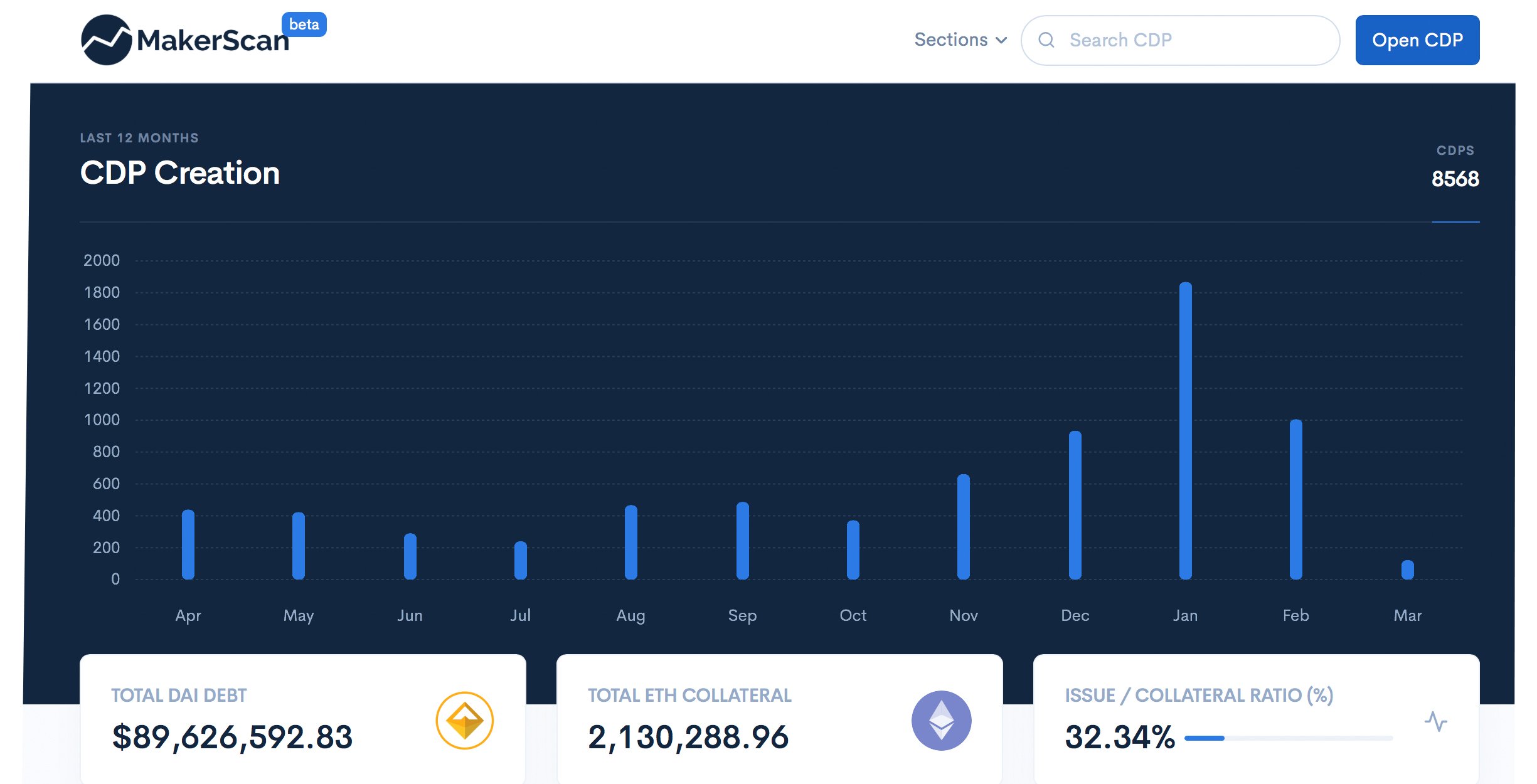
The Ethereum network has a popular decentralized autonomous organization (DAO) called Maker, which is now well known for creating a cryptocurrency-backed stablecoin called dai. The Single-Collateral Dai (SCD) system, launched in December 2017, allows anyone to leverage their ETH in order to create a stablecoin that keeps price valuation down to around $1 most of the time. Over the last 14 months of operation, the Maker DAO has become the most popular Ethereum-based system in 2019. At the time of publication, there’s more than 1 percent of the entire ETH supply in circulation locked up into the Maker system as there’s 2.1 million ETH used as collateral.
The Maker team consists of CEO Rune Christensen, CTO Andy Milenius, President Steven Becker and roughly 18 other leaders. The community is relatively small but has been growing since the project’s inception. Maker and the stablecoin dai community have a blog, a chat forum, and its own subreddit where individuals discuss the nascent ecosystem. At press time, dai is ahead of the stablecoin GUSD with the 55th largest market capitalization of around $89.3 million.
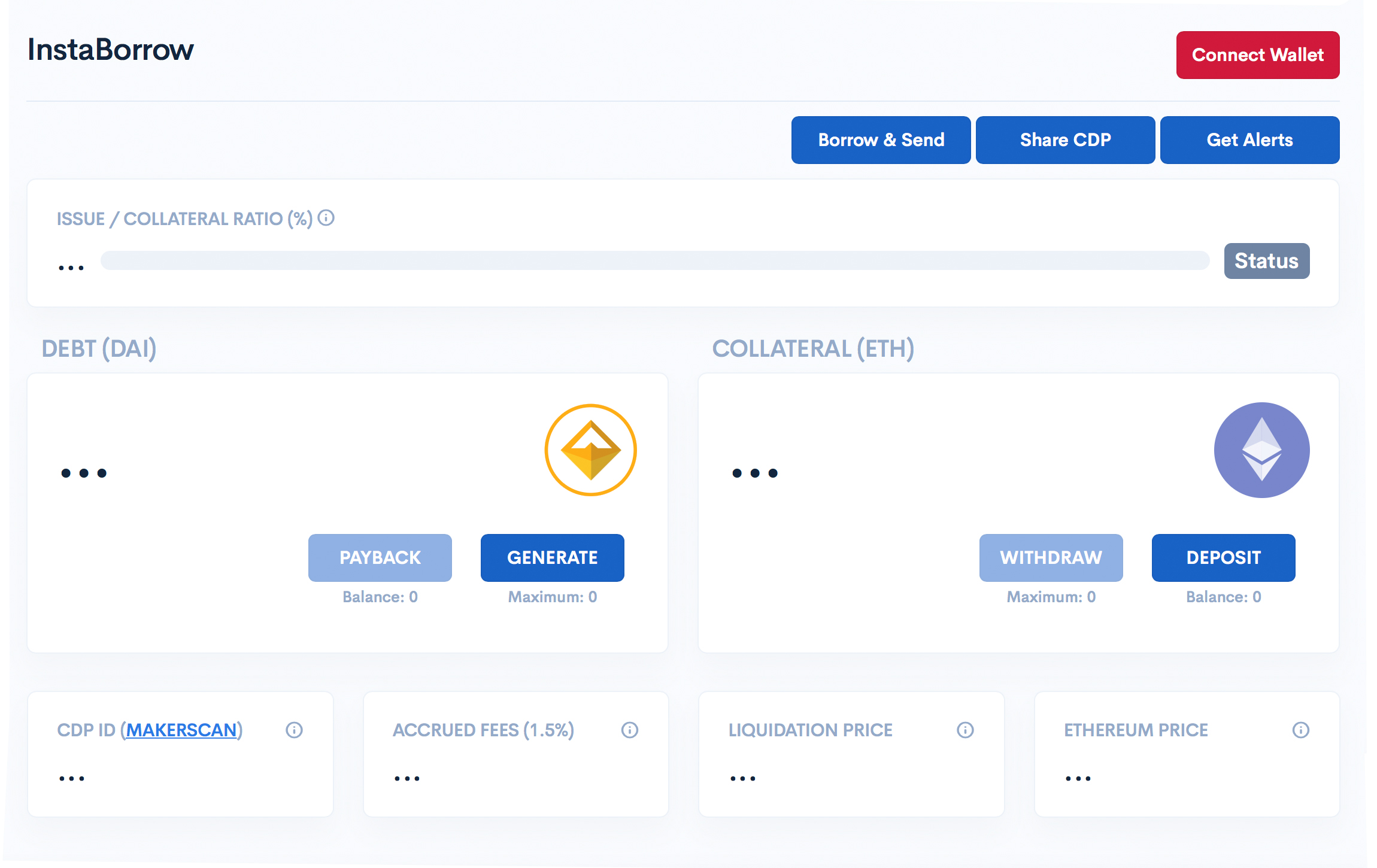
There are two fundamental differences between Maker’s dai and other stablecoins like USDC, GUSD, and USDT. For one, dai is not backed by fiat reserves held in a bank like a great majority of its stablecoin peers. The other difference is that fiat systems are collateralized by the company’s word and third-party audits while the transparency of dai can be seen onchain at all times. Basically, dai holds stability because ETH is locked into a contract used in a system called a Collateralized Debt Position (CDP). A user wanting to acquire dai sends the ETH to a CDP and can withdraw dai from there.
However, the collateralization ratio uses a method called overcollateralization (OC), which helps lower the system’s exposure to risk and keeps the credit (dai) through Maker’s autonomous feedback mechanisms. OC requires more funds than a typical dollar for dollar trade in order to obtain dai. The ratio of ETH collateral needed in order to acquire dai is fixed at 1.5:1 at all times, but users can purchase dai on the open market too.
There is currently 2.1 million ETH locked into Maker contracts that produce dai.
Critics of Maker, Overcollateralization, and a Stablecoin Unmediated by the Legal System
Maker and dai have become a popular subject among cryptocurrency supporters largely because some people like the concept of a liquid stablecoin for certain use cases as well as the idea dai is backed by crypto. However, there are some critics of the Maker protocol and the dai stablecoin it produces. Some skeptics believe the project could fall victim to the same scenario that happened to the Ethereum network’s first DAO which saw the loss of $50 million in June 2016. At the time, users exploited the DAO’s code enabling them to take one-third of the DAO’s funds to a subsidiary account. Another critique of Maker DAO explains that the OC scheme and paying the contract back with the equivalent amount of dai is well known. However, what the organization hasn’t explained yet “is that you also need to pay a stability fee in MKR,” Bennett Tomlin said last June.
“Also [dai] cannot always be collateralized in excess, because if there is a black swan event that destroys the value of ethereum that is no longer true,” Tomlin’s research details.
Tomlin’s study called a “Deep Look at Maker DAO and Dai and MKR” adds that the Maker’s creators explain in the white paper that in the event of a “black swan” crash the organization will dilute the “pooled ether.” The author’s post explains, “Why someone would trust this, I do not know — The developers are obviously aware of this risk, but it seems to be ignored.” Tomlin’s report also details that the biggest hurdle for the Maker team is the government-specific entities that regulate the U.S. financial activities. “Better watch out for the SEC, the CFTC, and the rest of the alphabet soup,” Tomlin warned.
A Multi-Collateral Dai and Other Chain’s Creating a Stablecoin
Despite some concerns, the Maker DAO continues to rake in lots of ethereum in order to create the world’s first working consumer-grade stablecoin based on the collateralized crypto assets. The project’s roadmap calls for a Multi-Collateral Dai system which will at some point be able to collateralize the dai stablecoin with other cryptocurrencies. On Nov. 6, 2018, the development team detailed that the code for Multi-Collateral Dai was published and contracts have been deployed to the system’s testnet.
Additionally, there has been talk of other cryptocurrencies following suit with the dai idea. Just recently the Bitcoin Cash (BCH) community discussed the creation of a stablecoin built on the BCH chain. The BCH network has been recently experimenting with token creation but something like dai on BCH would require some different elements. By and large, the Ethereum community seems to appreciate the Maker protocol and dai stablecoin and so far it has brought some more traction toward that ecosystem.
What do you think about the Maker protocol and the dai stablecoin? Let us know your thoughts on this subject in the comments section below.
Disclaimer: This article is for informational purposes only. Bitcoin.com does not endorse the Maker DAO or dai stablecoin. Readers should do their own due diligence before taking any actions related to the mentioned companies, creators, associates, or any of its affiliates or services. Bitcoin.com and the author are not responsible, directly or indirectly, for any damage or loss caused or alleged to be caused by or in connection with the use of or reliance on any content, goods or services mentioned in this article.
Image credits: Shutterstock, Maker DAO, Dai, Makerscan.io, and Pixabay.
Need to calculate your bitcoin holdings? Check our tools section.
Women’s health has long been devoid of technological innovation, but when it comes to fertility options, that’s starting to change. Startups in the space are securing hundreds of millions in venture capital investment, a significant increase to the dearth of funding collected in previous years.
Fertility entrepreneurs are focused on a growing market: couples are choosing to reproduce later in life, an increasing number of female breadwinners are able to make their own decisions about when and how to reproduce, and overall, around 10% of women in the US today have trouble conceiving, according to the Centers for Disease Control and Prevention.
Startups, as a result, are working to improve various pain points in a women’s fertility journey, whether that be with new-age brick-and-mortar clinics, information platforms, mobile applications, wearables, direct-to-consumer medical tests or otherwise.
Although the investment numbers are still relatively small (compared to, say, scooters), the trend is up — here’s the latest from founders and investors in the space.
VCs want to help you get pregnant
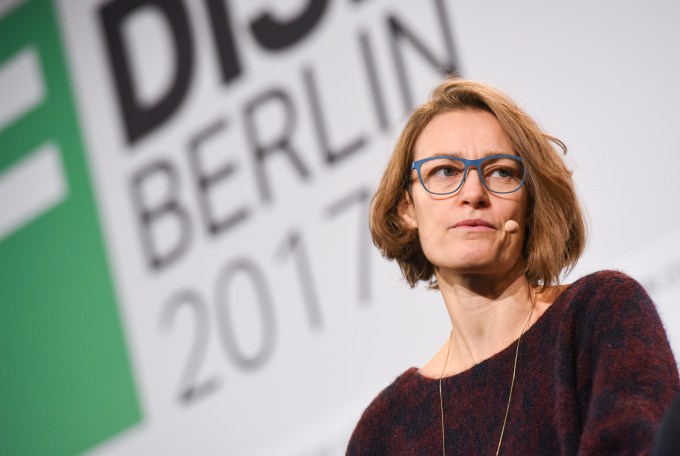
Clue, a period and ovulation-tracking app, co-founder and CEO Ida Tin talks at TechCrunch Disrupt Berlin 2017 (Photo by Noam Galai/Getty Images for TechCrunch)
This fall, TechCrunch received a tip that SoftBank, a prolific venture capital firm known for its nearly $100 billion Vision Fund, was investing in Glow, a period-tracking app meant to help women get pregnant. Max Levchin, Glow’s co-founder and a well-known member of the PayPal mafia, succinctly responded to a TechCrunch inquiry regarding the deal via e-mail: “Fairly sure you got this particular story wrong,” he wrote. Glow co-founder and chief executive officer Mike Huang did not respond to multiple requests for comment at the time.
Needless to say, some semblance of a SoftBank fertility deal got this reporter interested in a space that seldom populates tech blogs.
Femtech, a term coined by Ida Tin, the founder of another period and ovulation-tracking app Clue, is defined as any software, diagnostics, products and services that leverage technology to improve women’s health. Femtech, and more specifically the businesses in the fertility and contraception lanes, hasn’t made headlines as often as AI or blockchain technology has, for example. Probably because companies in the sector haven’t closed as many notable venture deals. That’s changing.
The global fertility services market is expected to exceed $21 billion by 2020, according to Technavio. Meanwhile, private investment in the femtech space surpassed $400 million in 2018 after reaching a high of $354 million the previous year, per data collected from PitchBook and Crunchbase. This year already several companies have inked venture deals, including men’s fertility business Dadi and Extend Fertility, which helps women freeze their eggs.
“In the last three to six months, it feels like investor interest has gone through the roof,” Jake Anderson-Bialis, co-founder of FertilityIQ and a former investor at Sequoia Capital, told TechCrunch. “It’s three to four emails a day; people are coming out of the woodwork. It feels like somebody shook the snow globe here and it just hasn’t stopped for months now.”
Dadi, Extend Fertility and FertilityIQ are among a growing list of startups in the fertility space to crop up in recent years. FertilityIQ, for its part, provides a digital platform for fertility patients to research and review doctors and clinics. The company also collects data and issues reports, like this one, which ranked businesses by fertility benefits. Anderson-Bialis launched the platform with his wife, co-founder Deborah Anderson-Bialis, in 2016 after the pair overcame their own set of infertility issues.
Anderson-Bialis said he has recently fielded requests from seed, Series A and growth-stage investors interested in exploring the growing fertility market. His company, however, has yet to raise any outside capital. Why? He doesn’t see FertilityIQ as a venture-scale business, but rather a passion project, and he’s skeptical of the true market opportunity for other businesses in the space.
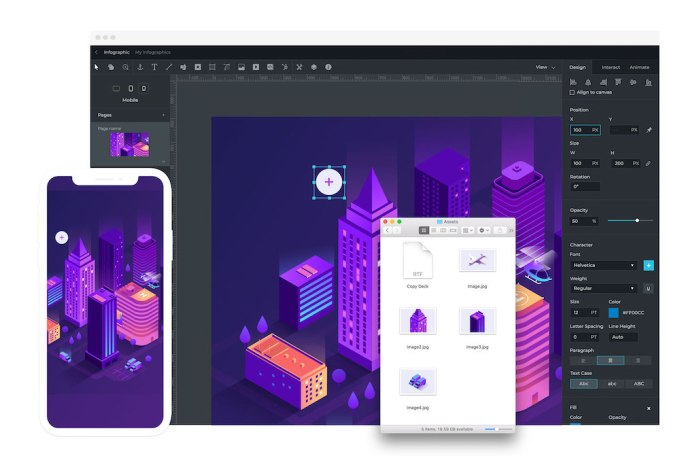
Ceros allows marketers to create animated, interactive content — but don’t call it a content marketing company.
“We think content is just a dry, bland, over-leveraged, oversaturated space,” said founder and CEO Simon Berg. “The goal is not to hack the system, the goal is to make a great experience for your customers.”
That’s why he describes Ceros as a platform for creating experiences. The company is focused on powering beautiful, well-designed graphics and web pages, instead of blog posts or white papers that mostly exist to snare search traffic.
Ceros is announcing today that it’s raised $14 million in Series C funding.
Ceros previously raised $19.5 million in funding, according to Crunchbase. The new round was led by Greenspring Associates, with participation from Grotech Ventures, CNF Investments, Sigma Prime Ventures, StarVest Partners, Greycroft and Silicon Valley Bank.
“Ceros is well known for empowering marketers to think creatively, but we have also come to know Ceros as a highly capital efficient business, which is a refreshing change in the burn-rate happy world of digital,” said Greenspring’s John Avirett, General Partner in a statement. “We’re confident that this investment will catalyze Ceros’ continued growth while enabling their team to opportunistically pursue acquisitions that enhance the core product and further penetration of key markets.”
“What we’ve continued to work on over the last seven years is to comply with laws of physics that are laws of internet, whilst giving as much creative freedom as possible,” Berg said. “We want to put the creative and the design piece first.”
The company says it’s now working with more than 400 customers, including well-known brands like United Airlines and Red Bull, as well as publishers including Condé Nast and Vice, plus sports teams like the Baltimore Ravens and Detroit Lions.
“Both in terms of the revenues that we’ve reached and the clients that we’ve worked with … you never really ‘arrive,’ but I feel like we’ve reached a critical milestone,” Berg said.
La gestion d’une start-up n’a aujourd’hui plus rien à voir avec la gestion des entreprises d’autrefois. D’une structure pyramidale, le management d’une équipe est désormais beaucoup plus linéaire et surtout en perpétuel évolution. Dans un environnement de plus en plus digital, où les technologies innovantes révolutionnent des pans entiers de l’industrie à un rythme effréné, les start-ups et les entrepreneurs doivent s’adapter continuellement et rapidement. Devenir agile et faire évoluer son business model dans un monde en aussi changeant n’est donc plus une option, c’est une nécessité.
Pour se former à ce type défi professionnel, le Programme Général de Management de emlyon business school est une opportunité à saisir, un moyen de développer ses connaissances et ses compétences dans l’une des meilleures écoles de France. Le dynamisme de la région lyonnaise en termes d’entrepreneuriat et la proximité avec la capital parisienne sont autant d’atouts géographiques à ne pas négliger. Cette formation dure environ 18 mois et elle est tout à fait compatible avec une autre activité professionnelle et accessible avec validation des acquis d’expérience dès le niveau Bac. Cette formation ne nécessite qu’au maximum 3 jours par mois de présence dans l’école. Avec 82% des participants dont le salaire à augmenté après ce programme de formation et 88% de satisfaction, la qualité de l’enseignement et des modules proposés n’est donc plus à démontrer. De plus, un réseau d’anciens diplômés important et de nombreux partenariats avec des incubateurs et des grandes entreprises vous permettront de mettre toutes les chances de votre côté pour la création et le développement de votre startup. Ce Programme Général de Management représente donc une belle opportunité pour vous assurer une formation reconnue dans le monde de l’entrepreneuriat!
Mais laissons les anciens élèves vos décrire leur expérience, ce sont encore eux qui peuvent en faire le meilleur retour d’expérience. Xavier Coste raconte par exemple : «Ce programme est très intéressant et facile d’accès. L’ouverture d’esprit et la richesse des modules sont des points très forts du programme.». Découvrez également en vidéo le parcours d’Adrien D’hoine, entrepreneur chez Kumqwat. Il nous explique les raisons pour lesquelles après avoir suivi le Programme Général de Management de emlyon business school il a souhaité créer sa startup :